Maryland’s housing department named Bert Bossar its first Opportunity Zone Investment Czar as 114 census tracts were designated, effective January 1, 2027.
ANNAPOLIS, Md. — Maryland has given its new Opportunity Zones a dedicated point person. The Department of Housing and Community Development, or DHCD, named Bert Bossar the state’s first Opportunity Zone Investment Czar in its November 6 announcement of the 114 census tracts that become Opportunity Zones on January 1, 2027 and stay in place through 2037.
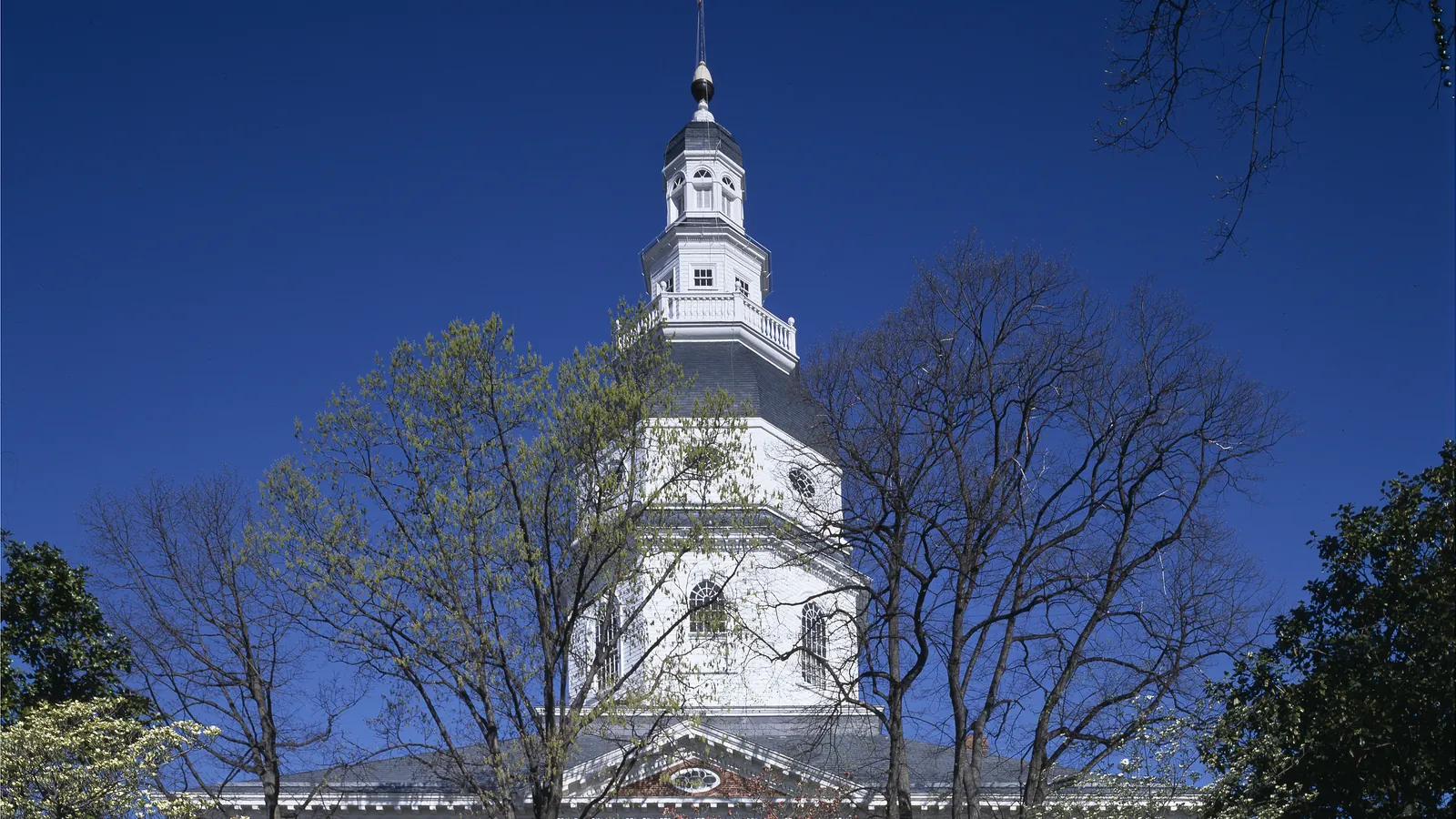
Lead photo: the dome of the Maryland State House in Annapolis. City-context photograph; it does not show a designated tract. Credit: Carol M. Highsmith / Library of Congress, via Wikimedia Commons, public domain; cropped and resized.
“Throughout the Opportunity Zone designation process, we worked directly with local governments and stakeholders to understand their needs and their vision for the communities that could benefit from this new version of the program,” DHCD Secretary Jake Day said in the release. “We intend to continue strengthening these partnerships and providing support by establishing a dedicated staff position to make sure Opportunity Zones benefit communities.”
Bossar’s job, as DHCD describes it, is to work with private, federal, state and local partners to attract investment and help projects in the zones come to fruition. He will also coordinate with the Governor’s Office of Business Advancement, the State Housing Ombudsman and the Permitting Liaison Assistance Team. DHCD says past experience shows that states with an assigned representative to move zone projects along have more success securing program investment.
“Opportunity Zones are a powerful tool for directing investment toward communities where it can have the greatest impact, but these designations are just the start,” Bossar said. “Over the next decade, my focus will be on working with every key partner – public and private – to bring capital and community together across the state and bring projects to life.” DHCD’s Opportunity Zone page lists Albert Bossar as its Opportunity Zone Investment Czar and the contact for questions.
168 nominations, 114 tracts
DHCD says it received 168 census tract nominations from 20 local jurisdictions, encouraged them to be selective and gave the most weight to nominations that named projects or investment strategies in eligible tracts. The list that Treasury released on November 5 holds 114 Maryland tracts, 54 fewer than the nominations DHCD received. Treasury’s announcement says every tract nominated by a governor was designated, and Maryland Commerce confirmed the 114-zone total on November 10.
The CDFI Fund final workbook shows where the 114 sit. Baltimore City has 38, Prince George’s County 18, Montgomery County 10 and Baltimore County nine, which puts 75 of the 114 in four jurisdictions. Frederick and Washington counties have four each. Six counties have three, five have two and Howard, Kent and Talbot have one apiece. That makes 20 jurisdictions with at least one zone: Baltimore City and 19 counties. Calvert, Caroline, Carroll and Queen Anne’s counties have none.
The workbook’s Rural QOZ column marks 29 of the 114 as Rural and 85 as Non-Rural. The Rural tracts are in 12 counties, from Garrett and Allegany in the west to Worcester and Wicomico on the Eastern Shore. DHCD says an investor who holds a Qualified Opportunity Fund interest for five years gets a 10 percent discount on the capital gain tax in a standard zone and 30 percent in a Rural one.
Why the count is 114, not 113
DHCD’s own FAQ still says Maryland “may designate 113 census tracts.” The official data gives 114, and the arithmetic explains the difference. Federal law caps a state at 25 percent of its eligible low-income tracts, and IRS Revenue Procedure 2026-14 says that when the quarter is not a whole number, the limit is rounded up to the next whole number. The revenue procedure’s April appendix lists 451 Maryland tracts: a quarter is 112.75, rounded up to 113. Treasury’s later October 30 eligibility workbook lists 454: a quarter is 113.5, rounded up to 114. Maryland’s 114 designated tracts are all on that 454-tract eligible list. The FAQ figure matches the April count, not the final one. DHCD’s release, DHCD’s designation page, Maryland Commerce and Treasury’s workbook all say 114.
Montgomery County: 10 tracts
Montgomery County Executive Marc Elrich said in a November 9 statement that the state secured 10 census tracts for the county. He named Germantown Town Center, Lakeforest, Rockville Pike and the Twinbrook Metro area, Wheaton, the White Oak and FDA campus area and the Washington Adventist area among them. Elrich said his team worked with Montgomery County Planning, the Montgomery County Economic Development Corporation and municipal partners in Gaithersburg, Rockville and Takoma Park to build the county’s recommendations.
“These designations create an important opportunity to attract private capital, accelerate redevelopment efforts, support small businesses, expand housing options, and strengthen local commercial corridors,” Elrich said. The Treasury workbook confirms 10 Montgomery County tracts, all Non-Rural. See the Montgomery County zone list.
A retired coal plant in a Charles County zone
Charles County has three of the designated tracts, and Treasury marks all three Rural. One of them is Census Tract 8512 in Newburg, GEOID 24017851200. State environmental filings give the address of the retired Morgantown Generating Station as 12620 Crain Highway, Newburg, in a Maryland Department of the Environment discharge-permit notice and the plant owner’s 2023 filing, which says the plant’s coal units were retired on June 1, 2022. The Census Bureau’s address lookup places that address in Tract 8512.
A zone designation does not pay for, permit or build anything. It makes qualifying investments inside the tract eligible for the program’s tax benefits, and the tract list does not say what, if anything, will be built on the plant site.
What happens next
The 114 new zones take effect January 1, 2027. Maryland’s 149 earlier zones, designated in 2018 and listed in the CDFI Fund’s 2018 file, stay in effect through the end of 2028, according to DHCD, which also says gains deferred under the first program must be recognized by December 31, 2026. The next test is whether DHCD, counties or developers name projects, financing or permits tied to specific tracts, the work DHCD says the czar is there to move.
Related. Maryland’s designated Opportunity Zones · National final-list coverage · Opportunity Zone tax-benefit guide
Reporting note: Tract counts and rural flags were counted from the CDFI Fund final workbook (6,576 tracts nationwide) and compared with DHCD’s and Maryland Commerce’s published totals. The 451 and 454 eligible-tract counts were counted from the IRS revenue procedure appendix and Treasury’s October 30, 2026 eligibility workbook. Quotes are from DHCD’s November 6 release and the Montgomery County Executive’s November 9 statement. The Morgantown address is from Maryland Department of the Environment documents; the tract match is a Census Bureau address lookup. No on-site reporting or independently conducted interviews. DHCD’s FAQ page was read on November 11, 2026. Educational reporting, not tax, legal or investment advice.
- dhcd.maryland.gov (1), as of November 11, 2026
- dhcd.maryland.gov (2), as of November 11, 2026
- business.maryland.gov, as of November 11, 2026
- montgomerycountymd.gov, as of November 11, 2026
- home.treasury.gov (1), as of November 11, 2026
- cdfifund.gov (1), as of November 11, 2026
- home.treasury.gov (2), as of November 11, 2026
- irs.gov (1), as of November 11, 2026
- irs.gov (2), as of November 11, 2026
- cdfifund.gov (2), as of November 11, 2026
- mde.maryland.gov (1), as of November 11, 2026
- mde.maryland.gov (2), as of November 11, 2026
- geocoding.geo.census.gov, as of November 11, 2026
Original reporting by the Opportunity Zone Invest Editorial Team for Opportunity Zone Invest, an independent OZ 2.0 research site. Facts are drawn from the primary sources cited above per our editorial standards. Nothing here is tax, legal, or investment advice. Found an error? See our corrections policy or write to Opportunity Zone Invest.
OZ tools: Opportunity Zone calculator · OZ 2.0 designation checker · 180-day rule calculator · Form 8997 instructions · Form 8996 instructions · all tools
Get OZ 2.0 updates
OZ 2.0 news, guidance, and key deadlines. Unsubscribe anytime.