All 6,576 nominated tracts were designated on Treasury's final list. Use the CDFI file and our map to check if an address is in a 2027 Opportunity Zone.
Every census tract nominated for Opportunity Zone 2.0 made Treasury’s final list. On Nov. 5, 2026, the Treasury Department and the IRS designated all 6,576 nominated tracts as Qualified Opportunity Zones effective Jan. 1, 2027 — 2,594 of them rural — according to press release sb0682. For capital diligence, the overnight shift is simple: state nomination press releases are no longer the map. The CDFI Fund designated-tract file is.
As of Nov. 5, 2026: 6,576 nominated tracts designated · 2,594 rural · effective Jan. 1, 2027 · authoritative list: CDFI/Treasury spreadsheet · source: Treasury sb0682; CDFI Opportunity Zones
The national final-list story covers how the 6,576 total was assembled. This piece is the diligence flip: how lenders, sponsors and CDFIs should confirm an address or GEOID now that nominations have become designations.
From nominated to designated overnight. Until Nov. 5, public state slates lived as nominations — useful for pipeline work, incomplete for closing. Sb0682 closes that gap in one sentence: “All of the 6,576 eligible census tracts have been designated as QOZs effective January 1, 2027.” There is no leftover nomination tier in the national totals Treasury published.
Eligible is not designated. Treasury’s October 30, 2026 eligibility workbook lists 25,462 currently eligible tracts nationwide. The April 6, 2026 baseline was 25,332 eligible tracts (sb0682). These eligibility figures are distinct from the 6,576 designated tracts in Treasury sb0682.
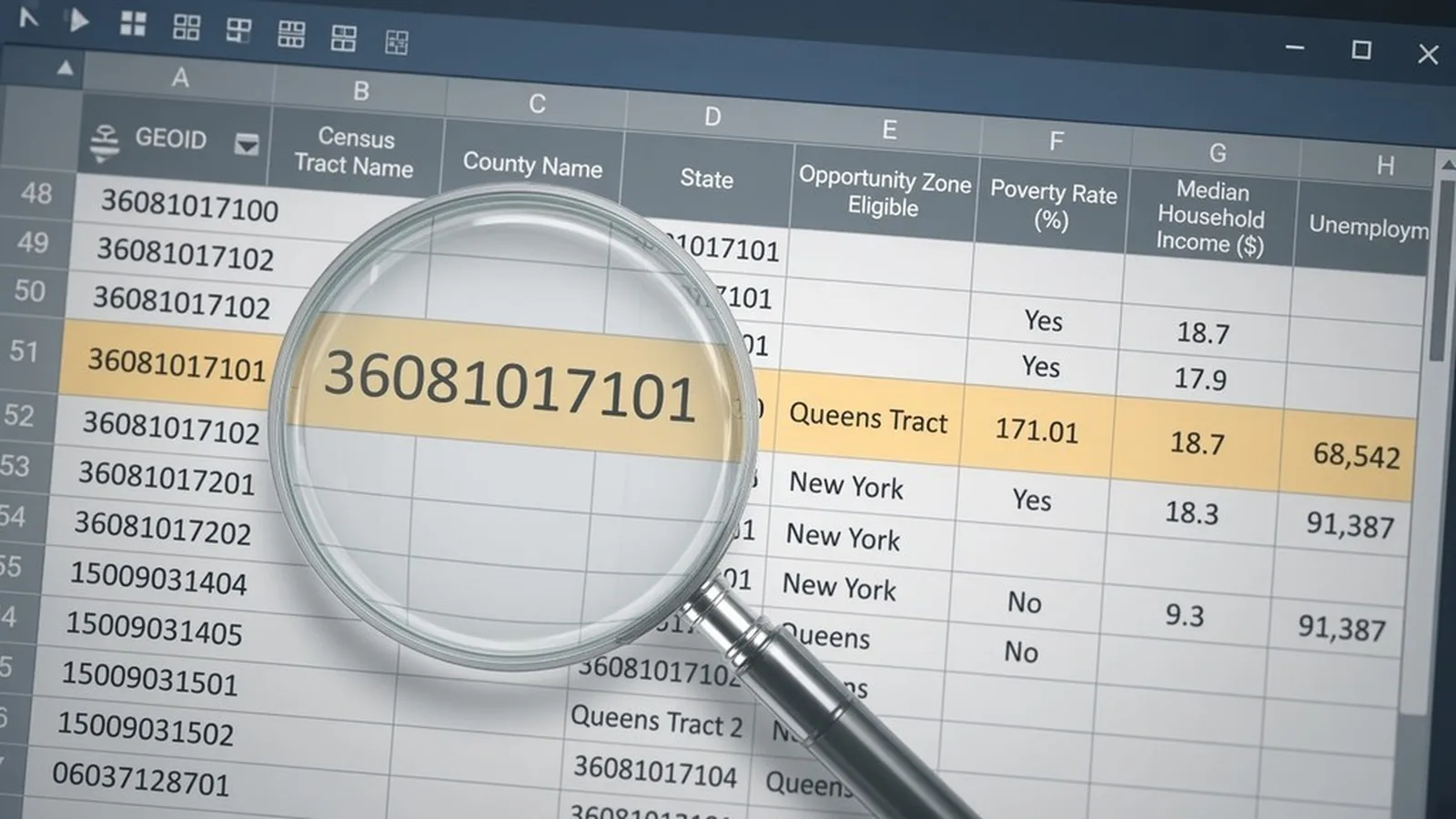
How to run an Opportunity Zone lookup after the final list. Primary check first: download the designated spreadsheet from the CDFI Fund Opportunity Zones page and match the 11-digit census tract GEOID. That file — not a governor’s PDF, not a local economic-development map, not a third-party scrape — is the federal designated list Treasury pointed to on Nov. 5.
For an address-level opportunity zone lookup, use the Opportunity Zone map without query strings in shared links, or look up a GEOID on the tract lookup tool. The map shows all 6,576 designated tracts. The CDFI spreadsheet is authoritative for whether a tract is designated; the map is the address finder layered on that work.
Then cross-check status on the state-by-state tracker and the OZ 2.0 final-list page as Opportunity Zone Invest finishes matching each jurisdiction to the CDFI file. Per-state headlines from nomination season are historical context; designated counts should come from the matched CDFI rows.
What lenders and CDFIs re-tag next. The diligence flip is operational, not geographic:
Retag pipelines. Screens that still say “nominated” or “eligible” for OZ 2.0 need a designated flag tied to the CDFI GEOID.
Separate maps. OZ 1.0 designations mostly run through Dec. 31, 2028 (Puerto Rico Dec. 31, 2027) under IRS Notice 2026-40. An address can sit in an OZ 1.0 zone, an OZ 2.0 zone, both, or neither — name which period the term sheet claims.
Layer capital only where the stack is real. Where a project already qualifies for CDFI debt or New Markets Tax Credit allocation, OZ equity is an overlay on a designated tract — not a substitute for those programs’ rules.
Watch rural flags carefully. Sb0682’s 2,594 rural count matters for statutory rural benefits; a rural thesis still needs the CDFI/Treasury rural designation and Notice 2026-40 tests, not nomination talking points alone.
This is general reporting from primary sources, not tax, legal or investment advice. Confirm GEOIDs and capital-stack eligibility with counsel and the CDFI file before closing.
A short address-check workflow. Pull the CDFI designated list and search the GEOID.
Confirm the same GEOID on the map or tract lookup.
Check tracker / final-list status after our CDFI match.
If the deal still leans on the 2018 map, read Notice 2026-40 end dates before treating Jan. 1, 2027 as a wind-down.
National totals: final-list story. More tools: tools hub.
FAQ
Were all nominated tracts designated?
Yes. Treasury designated all 6,576 nominated tracts as QOZs effective Jan. 1, 2027 (sb0682).
What is the authoritative Opportunity Zone lookup after Nov. 5?
The CDFI Fund designated-tract spreadsheet linked from cdfifund.gov/opportunity-zones. Use the map for address lookup — it shows all 6,576 designated tracts.
How do I check a GEOID without a street address?
Search the CDFI spreadsheet, or use the tract lookup tool with a clean path (no query string in shared links).
Can I still rely on a state nomination press release?
As historical evidence of what the governor submitted, yes. As proof a tract is a designated QOZ for OZ 2.0, no — match the GEOID to the CDFI designated file.
Do OZ 1.0 zones disappear on Jan. 1, 2027?
No. Most 2018 designations run through Dec. 31, 2028; Puerto Rico’s through Dec. 31, 2027 (Notice 2026-40). Diligence must name which map a deal uses.
Where is the national designated count tracked on OZI?
Tracker and OZ 2.0 final-list page, updated as CDFI matches clear; national story for the sb0682 totals.
- home.treasury.gov (1), as of November 5, 2026
- cdfifund.gov, as of November 5, 2026
- home.treasury.gov (2), as of November 5, 2026
- irs.gov (1), as of November 5, 2026
- irs.gov (2), as of November 5, 2026
- opportunityzoneinvest.com (1), as of November 5, 2026
- opportunityzoneinvest.com (2), as of November 5, 2026
- opportunityzoneinvest.com (3), as of November 5, 2026
- opportunityzoneinvest.com (4), as of November 5, 2026
- opportunityzoneinvest.com (5), as of November 5, 2026
- opportunityzoneinvest.com (6), as of November 5, 2026
Original reporting by the Opportunity Zone Invest Editorial Team for Opportunity Zone Invest, an independent OZ 2.0 research site. Facts are drawn from the primary sources cited above per our editorial standards. Nothing here is tax, legal, or investment advice. Found an error? See our corrections policy or write to Opportunity Zone Invest.
OZ tools: Opportunity Zone calculator · OZ 2.0 designation checker · 180-day rule calculator · Form 8997 instructions · Form 8996 instructions · all tools
Get OZ 2.0 updates
OZ 2.0 news, guidance, and key deadlines. Unsubscribe anytime.