Cole County had three designated Opportunity Zones in 2018 and has one on the 2027 list: tract 207 in downtown Jefferson City, marked Rural. Treasury’s data shows tract 105 is still eligible but not designated, and tract 106 no longer qualifies. Local coverage called the designation an extension of the 2018 zone, which holds for tract 207 only.
JEFFERSON CITY, Mo. — Cole County’s 2027 Opportunity Zone map is one tract, down from three in 2018, and Treasury’s data shows why the other two are off it. Tract 207 is designated and marked Rural on the CDFI Fund final list; it qualifies on poverty (22.3 percent) plus the income cap (81.6 percent). Tract 105 is still eligible on Treasury’s September 23 file, with 26.3 percent poverty and a 64.4 percent income ratio, but it is not designated; the Jefferson City News Tribune reported that only one tract was submitted in Cole County. Tract 106 no longer qualifies, at 12.2 percent poverty and an 88.8 percent income ratio. Opportunity Zone Invest’s Census internal-point analysis places all three tracts in Jefferson City. Local coverage on November 10 called the downtown designation an extension of the 2018 zone, which is accurate for tract 207, and did not name tracts 105 or 106.
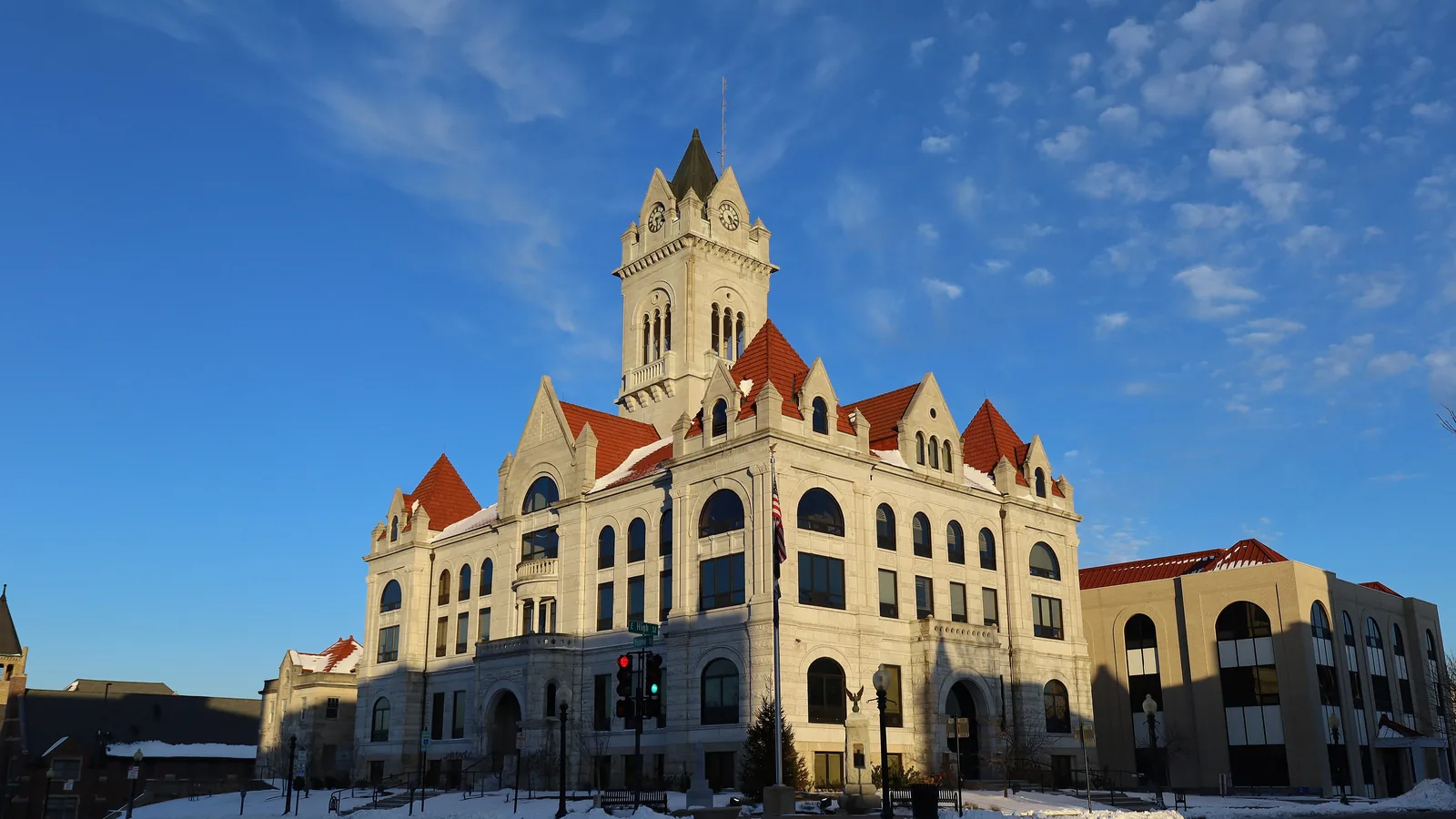
Lead photo: the Cole County Courthouse in Jefferson City, photographed in February 2025. City-context photograph; it does not show a designated tract. Credit: Antony-22 / Wikimedia Commons, CC BY-SA 4.0; cropped and resized.
The three Cole County tracts, compared:
| Tract | GEOID | 2027 status and Treasury figures |
|---|---|---|
| 207 (Rural) | 29051020700 | Designated. Eligible: poverty 22.3%, income ratio 81.6% |
| 105 | 29051010500 | Not designated. Still eligible: poverty 26.3%, income ratio 64.4% |
| 106 | 29051010600 | Not designated. Not eligible: poverty 12.2%, income ratio 88.8% |
Source: CDFI Fund final list, the December 14, 2018 designated Qualified Opportunity Zones list and Treasury’s September 23, 2026 eligibility file (ACS 2020–2024). The Rural flag is from the final workbook. Income ratio is tract median family income as a share of the Jefferson City, Mo. metropolitan median.
Treasury treats a tract as an eligible low-income community if its poverty rate is at least 20 percent and its income ratio is no more than 125 percent, or if the income ratio is 70 percent or less. Tract 207, with a median family income of $78,091 against the $95,644 metropolitan median, qualifies on the first path only. Tract 105, at $61,618, meets both. Tract 106, at $84,901, meets neither. Only two Cole County tracts, 105 and 207, are eligible on the file, and one was designated. Missouri has 523 eligible tracts and 131 designated ones, 68 of them Rural; the 2018 list had 161.
The 2018 list uses 2010 census tracts and the 2027 list uses 2020 tracts, so a matching number does not always mean a matching footprint. Here it does. In Opportunity Zone Invest’s analysis of the Census Bureau’s 2010-to-2020 tract relationship file, 2010 tract 207 sits entirely inside 2020 tract 207, which covers about the same land, and tracts 105 and 106 map almost one-to-one to their 2020 tracts. The two missing tracts are not renumbered; they are not on the 2027 list.
The News Tribune reported that the Jefferson City Chamber of Commerce worked with the city in 2018 to nominate three tracts, that the downtown tract was the only one submitted in Cole County this time, and that Boone County received four. It described the tract as running from U.S. 54 east to Ellis-Porter Riverside and from the Missouri River south to just past the Rex M. Whitton Expressway. ABC 17 (KMIZ) reported the same day that the tract “was originally designated as an Opportunity Zone in 2018,” and that “the new designation extends that opportunity for another 10 years, beginning Jan. 1, 2027.” Both place the planned downtown conference center in the tract. ABC 17 said it is unclear whether any planned project will use Opportunity Zone incentives.
Gov. Mike Kehoe and the Missouri Department of Economic Development announced the statewide list on November 5. “Missouri’s Opportunity Zones will help attract investment that strengthens communities, creates jobs, and supports lasting economic growth,” Kehoe said in the release. DED Director Michelle Hataway said, “Our local partners know their communities’ needs and opportunities best, and their input was essential to this process.” Neither statement addresses individual Cole County tracts.
What this means for investors
An investor who treated all three 2018 Cole County tracts as carrying into 2027 would be wrong about two of them. A new investment that depends on the 2027 map has to be in tract 207, and only if it otherwise qualifies. Because tract 207 is marked Rural, the enhanced rural incentives described in Rural 30% step-up: what Notice 2026-55 says, and what it is worth on a $500K gain can apply if the investment otherwise qualifies. Tract 105 is the one to watch: eligible, but not designated. Confirm a parcel’s tract with the census tract lookup or on the map. A tract can straddle city limits; Opportunity Zone Invest’s Census internal-point analysis places the tracts in Jefferson City, but it does not mean every parcel in a tract is inside today’s city limits.
What happens next
The designation takes effect January 1, 2027, under Treasury’s November 5 announcement. ABC 17 reported that JCREP said in an email that it is too early to estimate how much private investment the designation could generate, and that it plans to work with property owners, developers, financial institutions and potential investors to identify projects. A designation does not pay for, permit or build anything on its own.
Related. Tract 207, Cole County · Cole County Opportunity Zones · Cole County tract list · Missouri Opportunity Zones · Designated-tract final list · Designated-tract map · Census tract lookup · Opportunity Zone extension guide · Rural 30% step-up: what Notice 2026-55 says, and what it is worth on a $500K gain · Treasury designates all 6,576 Opportunity Zone 2.0 tracts on its final list
Reporting note: Poverty rates, median family incomes and income ratios (tract 207: 22.346369 percent, $78,091, 81.647569 percent; tract 105: 26.306 percent, $61,618, 64.424 percent; tract 106: 12.166 percent, $84,901, 88.768 percent) were read from Treasury’s September 23, 2026 eligibility file, which uses ACS 2020–2024 data; the area median is $95,644. Tract counts were counted from the CDFI Fund final workbook and the December 14, 2018 CDFI designated-QOZ list. The city assignment and the 2010-to-2020 tract comparison are Opportunity Zone Invest’s Census analysis, not a statement that any tract lies entirely inside today’s city limits. Quotes are from the Missouri governor’s November 5 release and ABC 17’s November 10 report. No outreach and no independently conducted interviews. Educational reporting, not tax, legal or investment advice.
FAQ
Are all three of Jefferson City’s 2018 Opportunity Zones still zones in 2027?
No. Only tract 207 (GEOID 29051020700) is on the CDFI Fund’s final 2027 list for Cole County. Tracts 105 and 106 (GEOIDs 29051010500 and 29051010600) were 2018 zones and are not on the 2027 list.
Why is tract 105 not a 2027 zone if it is still eligible?
Treasury’s data shows tract 105 meets both eligibility tests, with 26.3% poverty and an income ratio of 64.4%, but a tract has to be nominated by the state to be designated. The Jefferson City News Tribune reported that the downtown tract was the only one submitted in Cole County.
Why is tract 106 not eligible?
Treasury’s 2020–2024 data puts tract 106’s poverty rate at 12.2% and its median family income at 88.8% of the area median. The test needs poverty of at least 20% with income at or below 125% of the area median, or income at or below 70% of the area median. Tract 106 meets neither.
How does tract 207 qualify, and is it Rural?
Poverty is 22.3% and median family income is 81.6% of the area median, so it qualifies on the poverty-plus-cap path, not the 70% income test. The CDFI final list marks it Rural. Confirm the current rural rules, including IRS Notice 2026-55, with official IRS and Treasury sources and a tax professional.
How do I check whether a Jefferson City property is in tract 207?
Opportunity Zone status is by 2020 census tract, not by city limits or ZIP code. Use the Census Bureau address lookup, the federal map, or OZI’s tract lookup.
- newstribune.com, as of November 14, 2026
- abc17news.com, as of November 14, 2026
- governor.mo.gov, as of November 14, 2026
- ded.mo.gov, as of November 14, 2026
- home.treasury.gov (1), as of November 14, 2026
- cdfifund.gov (1), as of November 14, 2026
- cdfifund.gov (2), as of November 14, 2026
- home.treasury.gov (2), as of November 14, 2026
- cdfifund.gov (3), as of November 14, 2026
Original reporting by the Opportunity Zone Invest Editorial Team for Opportunity Zone Invest, an independent OZ 2.0 research site. Facts are drawn from the primary sources cited above per our editorial standards. Nothing here is tax, legal, or investment advice. Found an error? See our corrections policy or write to Opportunity Zone Invest.
OZ tools: Opportunity Zone calculator · OZ 2.0 designation checker · 180-day rule calculator · Form 8997 instructions · Form 8996 instructions · all tools
Get OZ 2.0 updates
OZ 2.0 news, guidance, and key deadlines. Unsubscribe anytime.