The City of Portland’s November 13, 2026 release lists nine Opportunity Zone tracts, including census tract 2.00 in the East of Airport Corridor. That tract is not on Treasury’s eligibility file or the CDFI designated list. Business Oregon and the federal workbook designate 11 Multnomah County tracts; the city table leaves off three of them.
PORTLAND, Ore. — The City of Portland’s November 13, 2026 release lists nine Opportunity Zone tracts, including census tract 2.00 labeled “East of Airport Corridor.” That tract is not on Treasury’s eligibility file and is not on the CDFI Fund final designations workbook. Business Oregon and the federal workbook designate 11 Multnomah County tracts; the city’s table leaves three of those official tracts off the page.
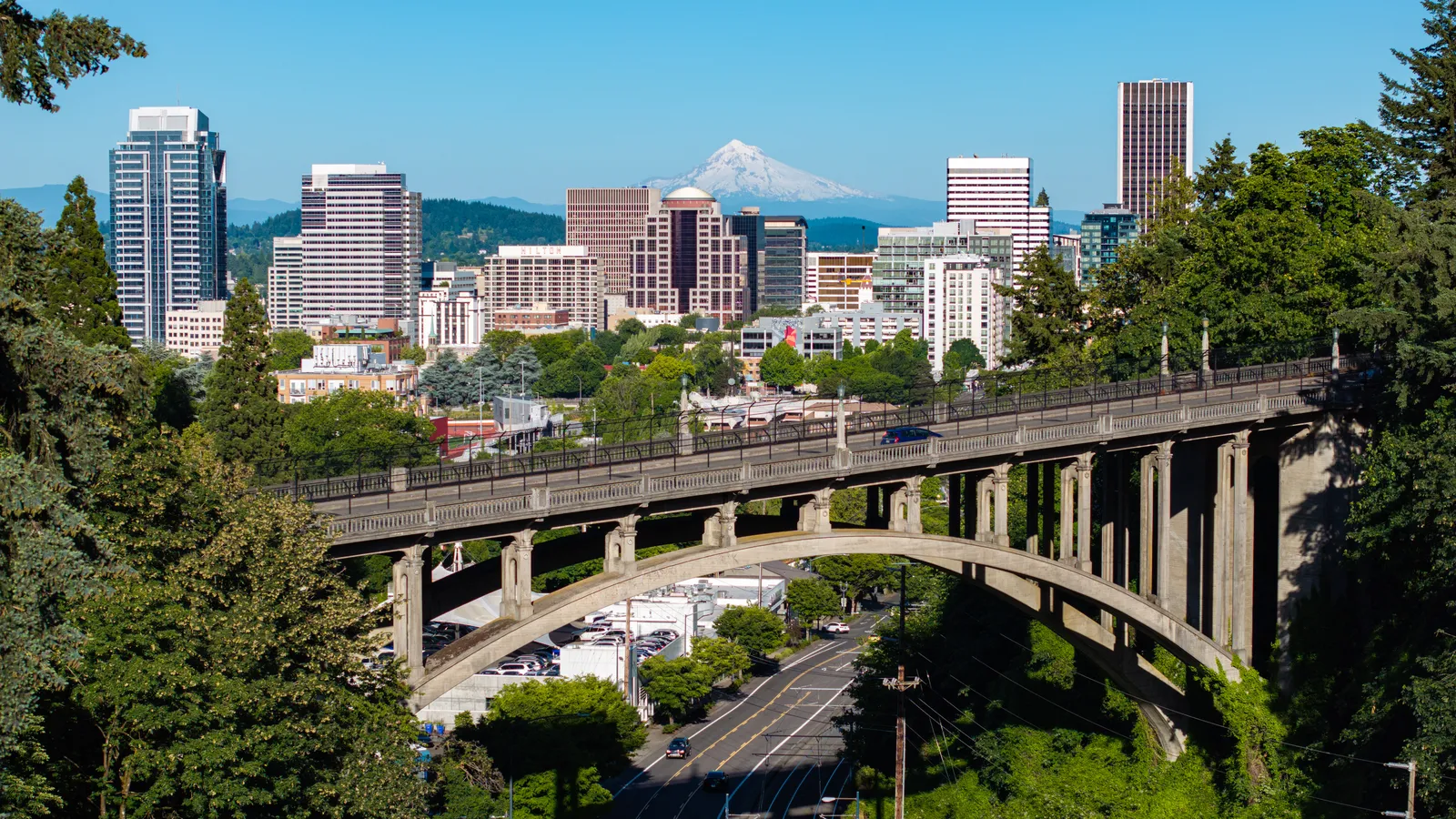
Lead photo: downtown Portland with Mount Hood and the Vista Bridge. City-context photograph; it does not show a designated tract. Credit: Spicypepper999 / Wikimedia Commons, CC0 1.0; cropped and resized.
The release says eight full census tracts in Portland and one tract split between Portland and Gresham are in newly designated federal Opportunity Zones. Its neighborhood table names tracts 21.01, 51.03, 106.01, 56.02, 23.03, 81, 73, 41.04, and 2.00. Eight of those nine numbers match designated Multnomah GEOIDs. Tract 2.00 does not.
City table versus the official Multnomah list
Multnomah County’s 11 designated tracts on the CDFI workbook — identical to Business Oregon’s Multnomah rows — are all Non-Rural. The city’s nine-row table and the three official tracts it omits line up as follows:
| City table tract | City label | GEOID | Official Multnomah / federal status |
|---|---|---|---|
| 21.01 | Central Eastside | 41051002101 | On official Multnomah list (City of Portland) |
| 51.03 | Old Town | 41051005103 | On official Multnomah list (City of Portland) |
| 106.01 | Downtown (West End) | 41051010601 | On official Multnomah list (City of Portland) |
| 56.02 | Portland State University | 41051005602 | On official Multnomah list (City of Portland) |
| 23.03 | Rose Quarter | 41051002303 | On official Multnomah list (City of Portland) |
| 81 | Gateway | 41051008100 | On official Multnomah list (City of Portland) |
| 73 | Airport/Columbia Corridor | 41051007300 | On official Multnomah list (City of Portland) |
| 41.04 | South of Rivergate/Terminal 4 | 41051004104 | On official Multnomah list (Port of Portland) |
| 2.00 | East of Airport Corridor | 41051000200 | Not on Treasury eligibility file or CDFI designated list |
| 102.00 | — | 41051010200 | On official Multnomah list (Port of Portland); omitted from city table |
| 96.05 | — | 41051009605 | On official Multnomah list (City of Gresham); omitted from city table |
| 104.08 | — | 41051010408 | On official Multnomah list (City of Gresham); omitted from city table |
Source for designation status: CDFI Fund final OZ designations workbook and Business Oregon’s Multnomah rows. City tract numbers and neighborhood labels: City of Portland Nov 13 release. Tract pages: Multnomah County Opportunity Zones.
The three official Multnomah GEOIDs missing from the city’s table are listed below. Nominating organizations are from Business Oregon’s column, not a city-limits assignment:
- 41051010200 — Port of Portland
- 41051009605 — City of Gresham
- 41051010408 — City of Gresham
The city’s “one tract split between Portland and Gresham” sentence is the city’s claim; the official list has two tracts whose nominating organization is the City of Gresham, not one split tract.
What the Nov 13 release said
Mayor Keith Wilson, in the city’s release, said: “Opportunity Zones are an important tool in our economic development toolbox because they help attract private investment to areas where we want to encourage growth and revitalization, without requiring local tax incentives or City funding.” He continued: “Having eight census tracts included in these newly designated areas gives the development community an additional incentive to invest in key parts of our city.” U.S. Senator Ron Wyden, quoted in the same release, said: “These fresh designations will help Portland compete for capital to support much-needed housing, create family-wage jobs, revitalize commercial corridors, and more.” The mayor’s “eight census tracts” line is the official claim this story checks against the federal and state lists.
What the eligibility file shows for tract 2.00
On the Treasury eligibility file for 2020 Census geography, Multnomah County has tracts 41051000201 and 41051000202; it does not have a row for tract 2.00. Neither of those eligibility-file tracts is designated. This story does not treat that as a proven split of tract 2.00; it is enough that 2.00 is absent from both the eligibility file and the designated list.
CDFI’s 2018 Multnomah list had 17 GEOIDs. The same-GEOID overlap with the 2027 Multnomah set is three tracts (02303, 07300, and 08100). Several 2018 numbers look like pre-split IDs. The lead here stays on the city’s Nov 13 list versus the official 2027 Multnomah map, not on a 2018-to-2027 count comparison.
What this means for investors
An address the city labeled “East of Airport Corridor” in tract 2.00 is not in a designated 2027 Opportunity Zone on the official lists. An address in one of the three omitted Multnomah tracts may be. Status is set by 2020 census tract, not by neighborhood name or a city press table. Confirm any Portland, Gresham, or Port of Portland parcel with the census tract lookup or on the designated-tract map, and start from the Multnomah County zone page or the Multnomah tract list.
Business Oregon’s nominating-organization column credits the City of Portland with seven of the 11 Multnomah tracts, the Port of Portland with two, and the City of Gresham with two. That column describes who submitted the tracts; it is not a substitute for checking a parcel’s GEOID.
What happens next
The designations take effect on January 1, 2027, and remain in place for 10 years, through December 31, 2036, per the city’s release, Business Oregon, and Treasury press release sb0682. If portland.gov corrects its table, or if a local outlet publishes this mismatch first, that changes the news value of this reconciliation. Until then, the official Multnomah map is the 11-tract CDFI and Business Oregon list — not the nine-row city table.
Related. Oregon Opportunity Zones · Multnomah County · Portland city page · Multnomah tract list · Designated-tract map · Census tract lookup · Designated-tract final list · Oregon’s 58 designated tracts (final list)
FAQ
Is census tract 2.00 a designated 2027 Opportunity Zone in Multnomah County?
No. Tract 2.00 (GEOID 41051000200) appears in the City of Portland’s November 13, 2026 release as “East of Airport Corridor,” but it is not on Treasury’s Opportunity Zone eligibility file and is not on the CDFI Fund final designations workbook. Multnomah County’s 11 designated tracts do not include 41051000200.
How many Multnomah County tracts are on the official 2027 Opportunity Zone list?
Eleven, all Non-Rural on the CDFI Fund final workbook. The Multnomah GEOIDs match Business Oregon’s Multnomah rows and are listed on Opportunity Zone Invest’s Multnomah County zone and tract-list pages.
Which official Multnomah tracts does the city’s Nov 13 table leave off?
Three: 41051010200 (nominating organization: Port of Portland) and 41051009605 and 41051010408 (nominating organization: City of Gresham). Eight of the nine tracts in the city table match designated GEOIDs; tract 2.00 does not.
Who submitted Multnomah’s 11 designated tracts?
Business Oregon’s nominating-organization column lists City of Portland for seven tracts, Port of Portland for two (04104 and 10200), and City of Gresham for two (09605 and 10408). That column is not a city-limits map; confirm any parcel in the tract lookup.
When do the 2027 Opportunity Zone designations take effect?
January 1, 2027, for ten years through December 31, 2036, per the City of Portland release, Business Oregon, and Treasury press release sb0682.
- portland.gov, as of November 19, 2026
- cdfifund.gov (1), as of November 19, 2026
- home.treasury.gov (1), as of November 19, 2026
- home.treasury.gov (2), as of November 19, 2026
- oregon.gov, as of November 19, 2026
- cdfifund.gov (2), as of November 19, 2026
Original reporting by the Opportunity Zone Invest Editorial Team for Opportunity Zone Invest, an independent OZ 2.0 research site. Facts are drawn from the primary sources cited above per our editorial standards. Nothing here is tax, legal, or investment advice. Found an error? See our corrections policy or write to Opportunity Zone Invest.
OZ tools: Opportunity Zone calculator · OZ 2.0 designation checker · 180-day rule calculator · Form 8997 instructions · Form 8996 instructions · all tools
Get OZ 2.0 updates
OZ 2.0 news, guidance, and key deadlines. Unsubscribe anytime.