Deschutes County’s only designated 2027 Opportunity Zone is census tract 9.02, marked Rural, with the City of Redmond as nominating organization. It qualifies on income (58.7 percent of the area median), not poverty (15.9 percent). None of the three Bend tracts that were zones in 2018 is on the 2027 list.
REDMOND, Ore. — Deschutes County has one designated 2027 Opportunity Zone, and none of the tract numbers Bend had in 2018 survived onto the list. Census tract 9.02 is on the CDFI Fund final list as the county’s only zone, marked Rural, and Business Oregon’s final designations list names the City of Redmond as the nominating organization. None of the three Bend tracts that were Opportunity Zones in 2018 is on the 2027 list.
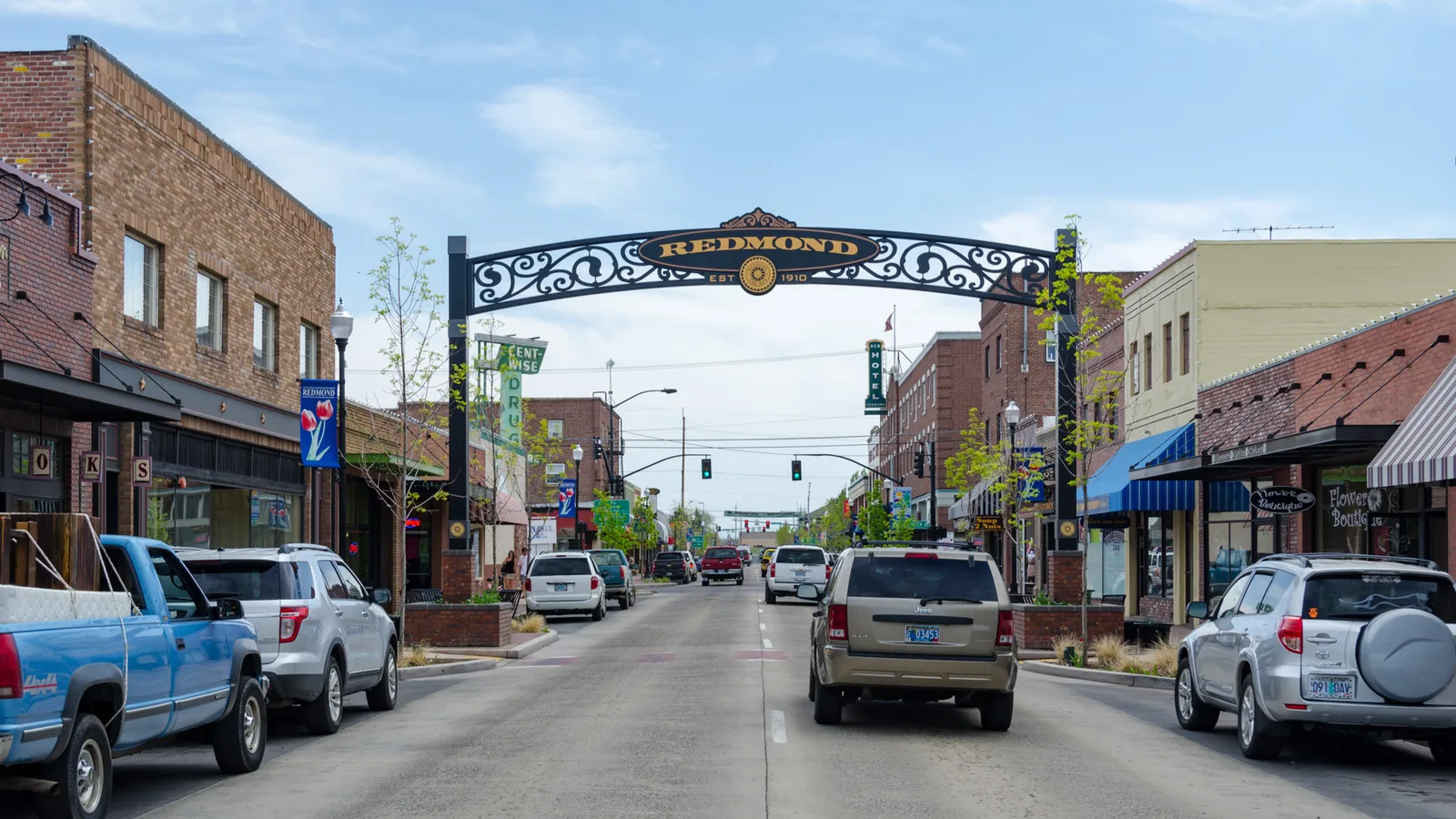
Lead photo: downtown Redmond, Ore., in May 2012. City-context photograph; it does not show a designated tract. Credit: Gary Halvorson, Oregon State Archives / Wikimedia Commons, CC BY 4.0; cropped and resized.
The designation takes effect January 1, 2027, and runs for 10 years, through December 31, 2036, under IRS Notice 2026-67 and Treasury’s November 5 announcement. Oregon designated 58 tracts in all, 32 of them Rural. Deschutes County’s share is one of the 58.
How tract 9.02 qualifies
On Treasury’s October 30, 2026 eligibility file, tract 9.02 has a median family income of $61,797 against an area median of $105,335, the Bend metropolitan-area figure on the file. That is a ratio of 58.7 percent, under the 70 percent income test. Its poverty rate is 15.9 percent, below the 20 percent poverty test. The tract qualifies on income, not poverty. The file draws on 2020–2024 American Community Survey data and flags the tract as both an eligible low-income community and Rural.
It was a narrow field. Treasury’s file lists seven Deschutes County tracts as eligible low-income communities. One was designated.
The 2018 Bend zones are not on the list
Deschutes County had four Opportunity Zones on the 2018 CDFI list. Business Oregon’s 2018 zone page labels them Redmond (tract 9), Bend’s Old Mill area (tract 15), the Bend Central Business District (tract 16) and East Bend (tract 18). The 2018 list used 2010 census tracts, and the 2027 list uses 2020 tracts, so each old number was split or redrawn.
| 2018 zone (Business Oregon label) | 2018 tract | 2020 tracts it became | 2027 status |
|---|---|---|---|
| Redmond | 9 | 9.01, 9.02 and part of 10.05 | 9.02 is designated and marked Rural; 9.01 and 10.05 are not designated |
| Bend (Old Mill area) | 15 | 15.01 and 15.02 | Neither designated; neither is an eligible low-income community on Treasury’s file |
| Bend (Central Business District) | 16 | 16.01 and 16.02 | Neither designated; neither is an eligible low-income community on Treasury’s file |
| Bend (East Bend) | 18 | 18.01 and 18.02 | Neither designated; both are eligible low-income communities on Treasury’s file |
Source: Business Oregon’s 2018 zone page for the labels, the December 14, 2018 CDFI list for the tract numbers, the Census Bureau’s 2010-to-2020 tract relationship file for the splits, and the CDFI Fund final list and Treasury eligibility file for 2027 status. Each Bend tract also has a sliver of land in a neighboring 2020 tract, not shown.
The Census Bureau’s tract relationship file shows that tract 9.02 overlaps the former Redmond zone. It covers about 14 percent of the old tract’s land area, so it is a partial overlap, not a carry-over. The two East Bend tracts, 18.01 and 18.02, were eligible on Treasury’s file but were not designated. The Old Mill and downtown Bend tracts were not eligible on the file at all.
What this means for investors
Bend property is not in a 2027 zone because it sat in a 2018 one. A 2027 investment in Deschutes County has to be inside tract 9.02, and only then if it otherwise qualifies. Because the tract is marked Rural, the enhanced rural incentives described in Rural 30% step-up: what Notice 2026-55 says, and what it is worth on a $500K gain may apply. They are not automatic. For how the Rural flag changes fund eligibility, see rural versus standard Opportunity Zone funds.
Owners and buyers in the old Bend zones should confirm a parcel’s tract before relying on either map. The 2018 designations stay in effect through December 31, 2028, according to Business Oregon, and that map is separate from the 2027 one. Check an address with the census tract lookup or the designated-tract map.
What happens next
Designation does not fund, permit or build anything. The test for tract 9.02 is whether the City of Redmond, Deschutes County or a developer names a project, financing or permits inside the tract. Elsewhere in Oregon, a city’s own list and the official county list did not match in Portland: Portland’s OZ list names tract 2.00 and omits three Multnomah zones.
Related. Tract 9.02, Deschutes County · Deschutes County Opportunity Zones · Deschutes County tract list · Oregon Opportunity Zones · Designated-tract map · Census tract lookup · Rural vs. standard funds · Portland’s tract 2.00 story
Reporting note: Tract 9.02’s poverty rate (15.923796 percent, rounded to 15.9), median family income ($61,797), area median ($105,335) and ratio (58.667111 percent, rounded to 58.7) were read from Treasury’s October 30, 2026 eligibility file. The count of seven eligible Deschutes tracts and the eligibility of the Bend successor tracts come from the same file. The Deschutes tract count, the Rural flag and the 2018 tract numbers were read from the CDFI Fund final workbook and the December 14, 2018 CDFI list. The nominating organization is from Business Oregon’s final designations list. The 2020 tract splits and the 14 percent land-area share were calculated from the Census Bureau’s 2010-to-2020 tract relationship file. The statement about the 2018 zones is from Business Oregon’s 2018 zone page. This article is for general information. It is not tax, legal or investment advice.
FAQ
What is Deschutes County’s only designated 2027 Opportunity Zone?
Census tract 9.02, GEOID 41017000902. The CDFI Fund final list marks it Rural, and Business Oregon’s final designations list names the City of Redmond as the nominating organization. It is one of Oregon’s 58 designated tracts.
Are any Bend tracts designated for 2027?
No. The three Bend tracts that were Opportunity Zones in 2018, Old Mill (tract 15), the Central Business District (tract 16) and East Bend (tract 18), were split in the 2020 census, and none of their successor tracts is on the 2027 list. Check a parcel with the census tract lookup.
How can tract 9.02 qualify if its poverty rate is only 15.9%?
It qualifies on income. Treasury’s eligibility file puts the tract’s median family income at 58.7 percent of the area median, below the 70 percent income test. The poverty rate, 15.9 percent, is under the 20 percent poverty test.
Does the rural incentive apply in tract 9.02?
The final list marks the tract Rural. If an investment otherwise qualifies, the enhanced rural incentives can apply. Confirm the current rural rules, including IRS Notice 2026-55, with official IRS and Treasury sources and a tax professional.
Do the 2018 Bend zones still work?
Business Oregon says the 2018 designations stay in effect through December 31, 2028. They are separate from the 2027 map, which takes effect January 1, 2027.
- oregon.gov (1), as of November 20, 2026
- oregon.gov (2), as of November 20, 2026
- oregon.gov (3), as of November 20, 2026
- cdfifund.gov (1), as of November 20, 2026
- cdfifund.gov (2), as of November 20, 2026
- home.treasury.gov (1), as of November 20, 2026
- home.treasury.gov (2), as of November 20, 2026
- irs.gov, as of November 20, 2026
- www2.census.gov, as of November 20, 2026
Original reporting by the Opportunity Zone Invest Editorial Team for Opportunity Zone Invest, an independent OZ 2.0 research site. Facts are drawn from the primary sources cited above per our editorial standards. Nothing here is tax, legal, or investment advice. Found an error? See our corrections policy or write to Opportunity Zone Invest.
OZ tools: Opportunity Zone calculator · OZ 2.0 designation checker · 180-day rule calculator · Form 8997 instructions · Form 8996 instructions · all tools
Get OZ 2.0 updates
OZ 2.0 news, guidance, and key deadlines. Unsubscribe anytime.