Census tract 1148, a 310-acre wedge of Cleveland’s Kinsman neighborhood along the Opportunity Corridor, is on Treasury’s final list for 2027. Its land, then tracts 1143 and 1147, was also on the 2018 map. Iron works and a notorious housing project once defined it; a cold-storage warehouse, a century-old bakery and a planned jobs district shape it now.
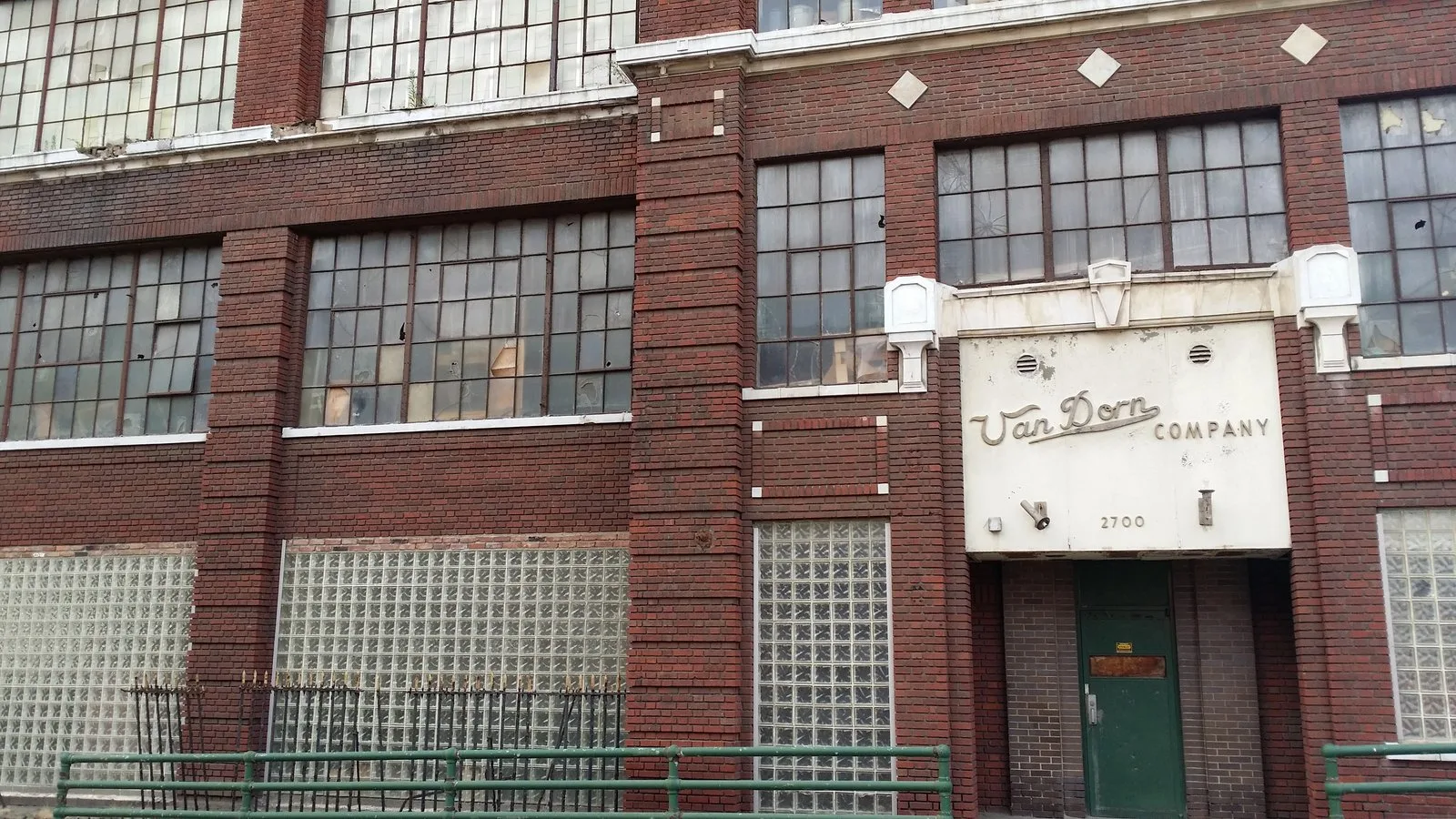
CLEVELAND, Ohio — For most of the 20th century, this corner of Cleveland’s Kinsman neighborhood ran on iron. The Van Dorn Iron Works on East 79th Street made wrought-iron fences, jail cells, structural steel, and frames and fenders for automobiles. A century ago it employed 1,100 people in a dozen buildings covering 400,000 square feet, NEOtrans reported in a 2022 history of the plant. When it closed in January 1991, 110 workers were left. By 2022 a single warehouse remained, and it had a demolition permit pending.
That stretch of East 79th forms the eastern edge of census tract 1148, a wedge of about 310 acres that narrows to a point near East 55th Street. Much of it lies in what Clevelanders have long called the Forgotten Triangle. Treasury’s final list, published November 5, designates the tract (GEOID 39035114800) as one of 6,576 Opportunity Zones that take effect January 1, 2027. It is one of 39 designated tracts in Cuyahoga County and 260 in Ohio.
The line on the map is not new here. Under 2010 census numbering, the same ground made up tracts 1143 and 1147, plus a sliver of 1141, and all three were on the 2018 Opportunity Zone list. The 2020 census merged them into tract 1148. For this corner of Cleveland, 2027 is a second round. The better question is what the first round left behind, and what is already moving before the second begins.
A township swallowed by a city
Kinsman began as farmland in Newburgh Township, according to the Encyclopedia of Cleveland History at Case Western Reserve University. Mills along Mill Creek drew settlers, and railroads drew heavy industry. By 1894 all of present-day Kinsman had been annexed by Cleveland. Kinsman Road, now U.S. 422, follows the route of the Cleveland & Newburgh Railroad, a steam line that began running from what is now East 55th Street in 1868. Today the road cuts diagonally across tract 1148 for about eight-tenths of a mile.
By the 1920s Kinsman was a working-class Jewish neighborhood, home to trade unions and the Workmen’s Circle. The encyclopedia dates a long decline to the years after World War II. Jewish families moved to the suburbs. Black families arrived from the South and from neighborhoods cleared for urban renewal closer to downtown. Factories closed. Kinsman’s population fell from 20,189 in 1940 to 5,824 in 2000.
Public housing followed the steel. In the late 1950s, 130 acres between East 71st and East 79th streets, once a Republic Steel dump and slag heap, became the 650-unit Garden Valley Estates. Federal housing officials soon described it as “the second-worst public housing in the nation, plagued by crime, inadequate maintenance, and mismanagement,” the encyclopedia records. Garden Valley was razed in 2009 to make way for Heritage View Homes, a Cuyahoga Metropolitan Housing Authority development of single-family houses, townhouses and apartment buildings. One phase, Heritage View III at 7225 Carson Avenue, sits inside the tract.
Who lives here now
The numbers are stark. Treasury’s eligibility file, built on 2020–2024 American Community Survey estimates, puts the tract’s poverty rate at 78.5%. Its median family income is $10,938, about 11% of the Cleveland metro area’s $95,803. Across the city, about 31% of residents live below the poverty line.
The same Census survey counts about 2,200 residents (2,233, with a margin of error of 414) and 895 occupied homes. Renters occupy 876 of them.
The boulevard through the middle
The largest change of the past decade runs straight through the tract. The Opportunity Corridor, a three-mile boulevard linking Interstate 490 at East 55th Street with University Circle, opened to traffic on November 12, 2021. Freshwater Cleveland reported that it cost $257 million. About seven-tenths of a mile of it crosses tract 1148.
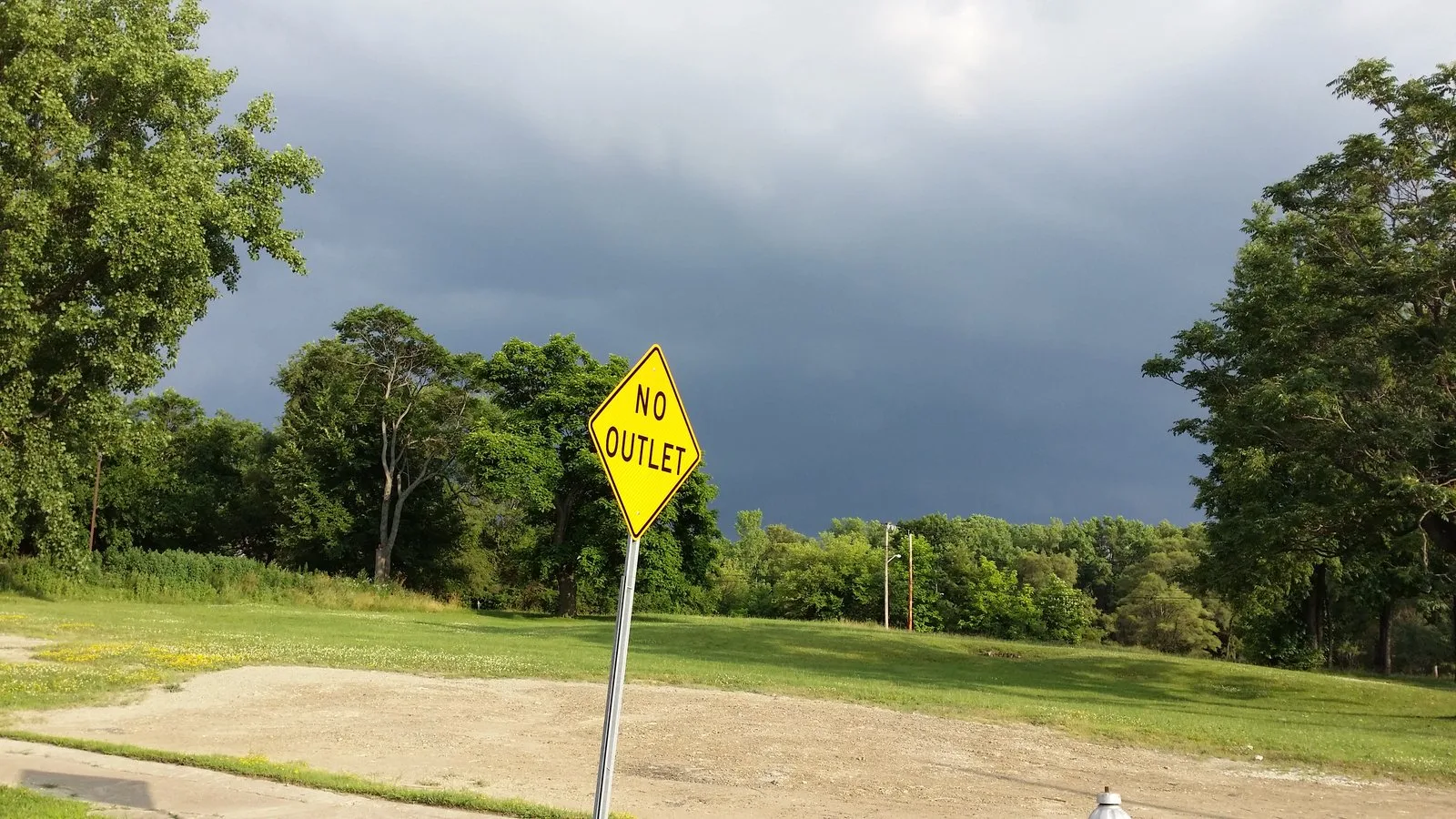
The road was sold as an economic project as much as a traffic one. At the ribbon cutting, Ohio Department of Transportation director Jack Marchbanks said it “opens up the potential for new economic development, new jobs, and a new identity for this community.”
Not every plan held. The city announced a new police headquarters in 2019 on land west of East 75th Street and north of the boulevard, inside the tract, and Mayor Frank Jackson’s administration held a ceremonial groundbreaking there on December 16, 2021. In November 2022, Mayor Justin Bibb’s administration chose the ArtCraft building on Superior Avenue instead, citing estimated savings of $40 million.
Other projects did land. Nor-Am Cold Storage opened a 157,000-square-foot freezer warehouse at 2797 East 75th Street in March 2024, a $50 million investment. Nor-Am vice president Rebecca Thomas told the Greater Cleveland Partnership it was “the largest thus far on the Opportunity Corridor.” One of its customers, Orlando Baking, has baked at 7777 Grand Avenue since 1979. The encyclopedia says the family company had considered moving to the suburbs and instead built a 175,000-square-foot plant in the city. Both addresses fall inside the tract.
Smaller anchors
Burten, Bell, Carr Development, the community development corporation formed in 1990 to serve Central and Kinsman, opened Bridgeport Place in 2008. The $2.2 million, 13,200-square-foot retail and commercial complex stands at Kinsman Road and East 72nd Street.
On East 79th, the stone church built in 1899 for the First Hungarian Reformed congregation, according to the Encyclopedia of Cleveland History, now Second New Hope Baptist Church, became a Cleveland landmark when City Council passed an ordinance on September 16, 2024. NEOtrans reported that the community development corporation pursued the landmark status and has a mixed-use plan nearby that could include renovating the church.
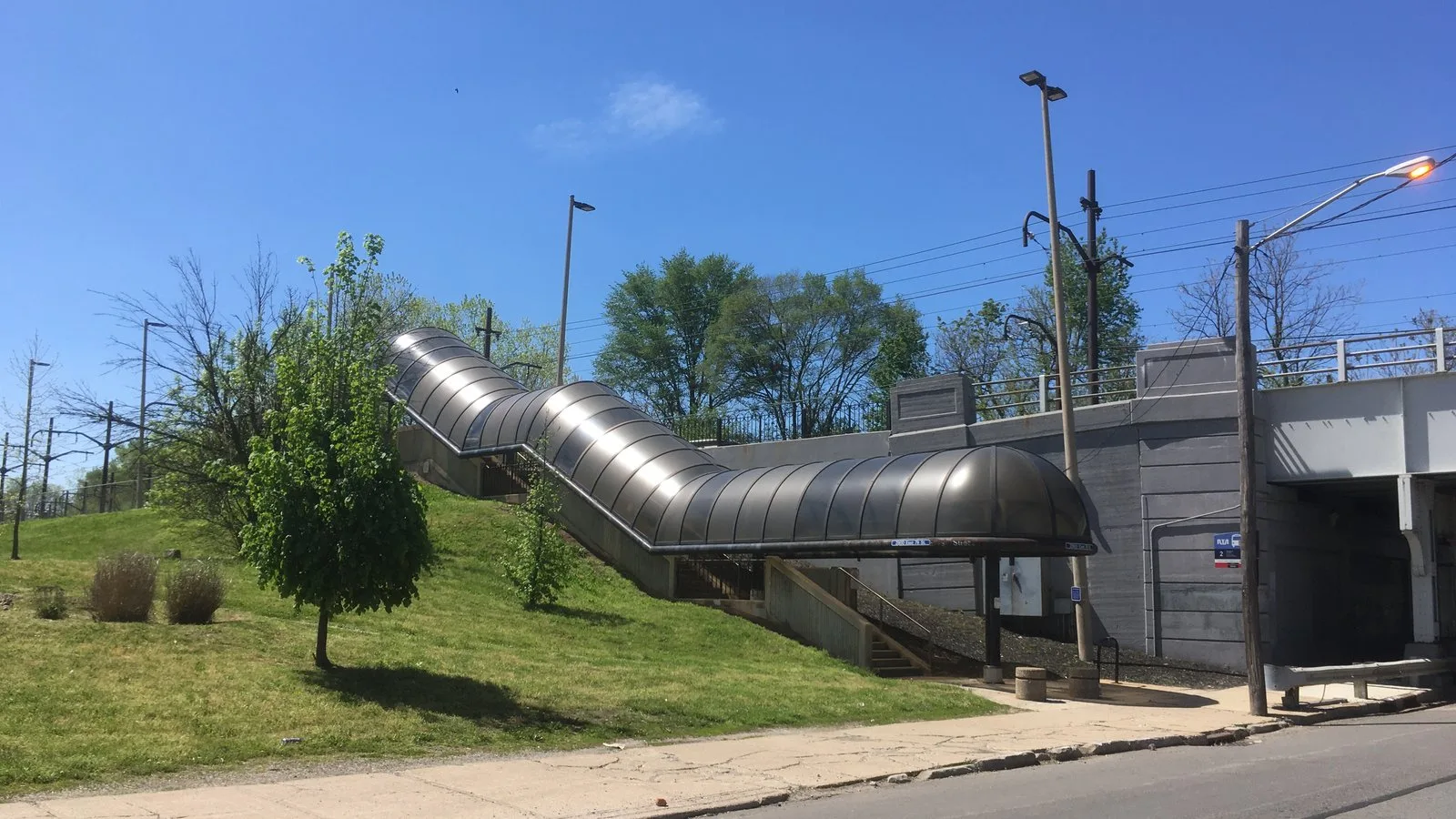
That plan is tied to the Blue and Green Line station at East 79th, on the tract’s eastern edge. In the mid-2010s the station averaged 145 boardings a day and was considered for closure, NEOtrans reported. It closed in June 2025 for a $10 million rebuild, $8 million of it from a federal accessibility grant, with work scheduled to finish by the end of summer 2026.
Across the street, the next wave
Much of what comes next lies just outside the tract line. In May, NEOtrans reported, citing three unnamed sources, that a roughly 25-acre site at the southeast corner of the boulevard and East 79th, directly east of the tract, was being assembled for a proposed laboratory and research complex backed by the Cleveland Clinic. A Clinic spokeswoman told the outlet, “At this time, we don’t have any information to share.”
The same month, Bibb and the Site Readiness for Good Jobs Fund unveiled the Midline, a plan to prepare more than 350 acres of former industrial land on the East Side for employers, with a goal of more than 2,500 jobs. Signal Cleveland reported that the district takes in existing businesses including Orlando Baking and Nor-Am, and that making it shovel-ready would cost $80 million to $100 million.
Council Member Richard Starr, whose Ward 5 includes the tract, welcomed the Midline with a warning. “For too long, Ward 5 has carried the burden of contaminated, vacant land while waiting for real investment,” he said in a statement released with the plan. “I support this designation but let me be clear: this cannot just be another plan on paper. This project area must lead to real cleanup, real jobs, and real opportunities for the residents who live here today.”
What the designation does and what happens next
The Opportunity Zone incentive, in section 1400Z-2 of the tax code, applies to capital gains that investors place in qualified opportunity funds, which in turn invest in property or businesses inside a zone. It brings no grant, program office or project of its own. People who rent or own a home in the tract get no tax break for living there, as our guide to buying a home in a zone explains, and the evidence on home values from the 2018 map is mixed.
It is hard to separate what the first round did here from everything that arrived alongside it: a state-built boulevard, city land assembly, a philanthropic site fund and employers that never left. The 2027 designation adds one more tool to that mix. Whether it reaches the roughly 2,200 people who live here is the test Starr set.
See tract 1148 on the Opportunity Zone map, look up any address with the designation checker, or read how OZ 2.0 works. Ohio’s full 2027 list is covered in our Midwest designations story.
FAQ
What neighborhood is census tract 39035114800 in?
Tract 1148 in Cuyahoga County lies almost entirely in Cleveland’s Kinsman neighborhood (city Statistical Planning Area 21). The tract runs along the Opportunity Corridor from a point near East 55th Street to East 79th Street, and much of it lies in the area long called the Forgotten Triangle.
Is tract 39035114800 a 2027 Opportunity Zone?
Yes. It is designated on Treasury’s final OZ 2.0 list, published November 5, 2026, as a non-rural tract. The designation takes effect January 1, 2027.
Was this part of Kinsman an Opportunity Zone before?
Yes. Under 2010 census numbering the same land made up tracts 1143 and 1147, plus a sliver of 1141, all on the 2018 Opportunity Zone list. The 2020 census merged them into tract 1148.
Do residents of an Opportunity Zone get a tax break?
No. The incentive in IRC section 1400Z-2 applies to capital gains invested through qualified opportunity funds. Renting or owning a home in a zone does not by itself qualify for any Opportunity Zone tax benefit.
- home.treasury.gov (1), as of November 18, 2026
- cdfifund.gov (1), as of November 18, 2026
- home.treasury.gov (2), as of November 18, 2026
- cdfifund.gov (2), as of November 18, 2026
- www2.census.gov, as of November 18, 2026
- api.censusreporter.org, as of November 18, 2026
- case.edu (1), as of November 18, 2026
- case.edu (2), as of November 18, 2026
- case.edu (3), as of November 18, 2026
- neo-trans.blog (1), as of November 18, 2026
- neo-trans.blog (2), as of November 18, 2026
- neo-trans.blog (3), as of November 18, 2026
- freshwatercleveland.com, as of November 18, 2026
- clevelandohio.gov, as of November 18, 2026
- news5cleveland.com, as of November 18, 2026
- greatercle.com, as of November 18, 2026
- cityofcleveland.legistar.com, as of November 18, 2026
- signalcleveland.org, as of November 18, 2026
- law.cornell.edu, as of November 18, 2026
Original reporting by the Opportunity Zone Invest Editorial Team for Opportunity Zone Invest, an independent OZ 2.0 research site. Facts are drawn from the primary sources cited above per our editorial standards. Nothing here is tax, legal, or investment advice. Found an error? See our corrections policy or write to Opportunity Zone Invest.
OZ tools: Opportunity Zone calculator · OZ 2.0 designation checker · 180-day rule calculator · Form 8997 instructions · Form 8996 instructions · all tools
Get OZ 2.0 updates
OZ 2.0 news, guidance, and key deadlines. Unsubscribe anytime.