Eight Richmond tracts are on the 2027 Opportunity Zone map. See the verified list and how Virginia tied its selections to housing and investment readiness.
RICHMOND, Va. — Richmond has eight census tracts on the new federal Opportunity Zone list, putting neighborhoods from Gilpin Court to parts of Southside at the center of a fresh effort to attract long-term private investment.
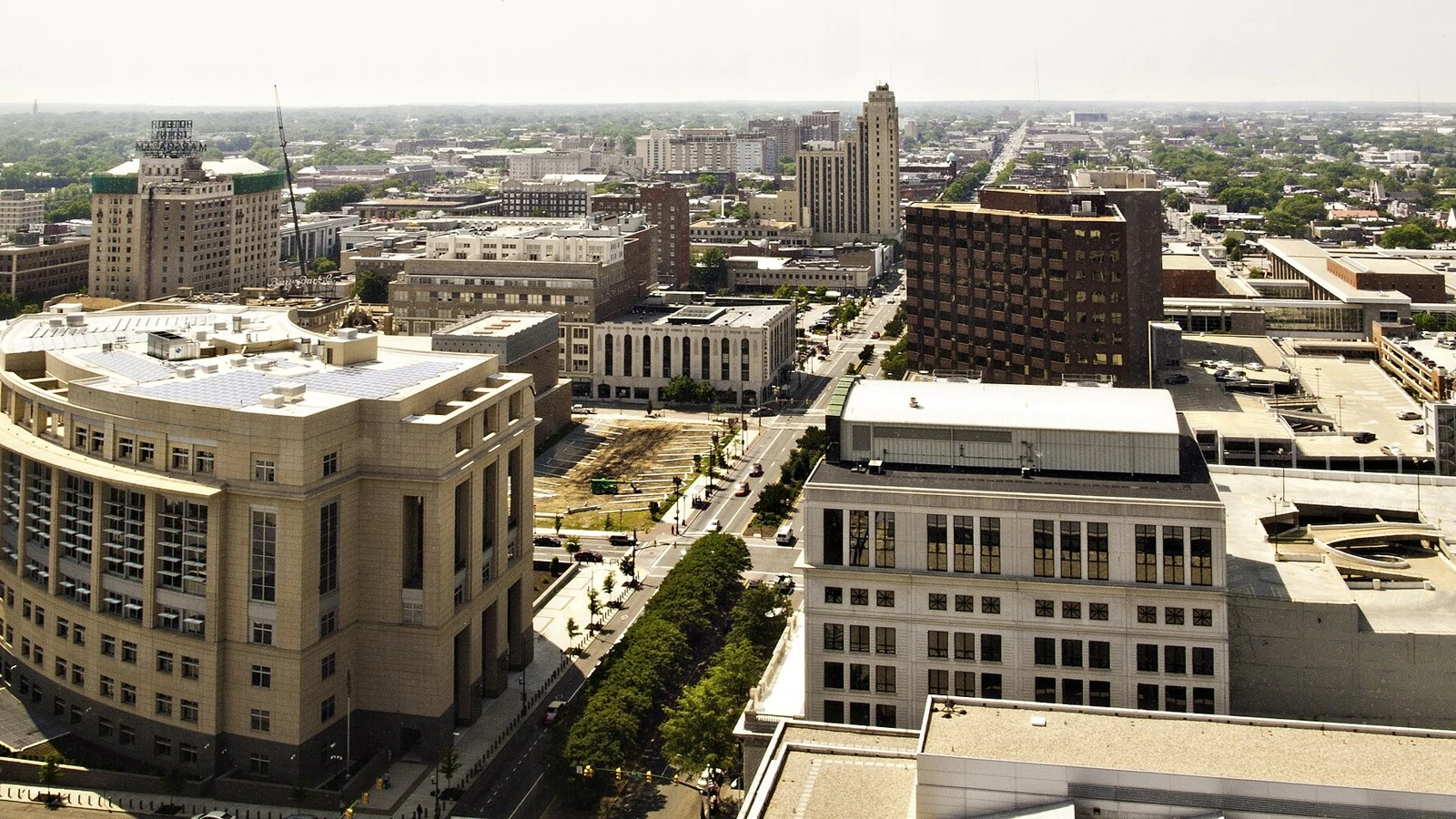
Lead photo: Broad Street viewed from Richmond City Hall, May 26, 2011. Archival city-context photograph, not a map of the new zones or evidence that every pictured property qualifies. Credit: Brent and Amanda I / Wikimedia Commons, CC BY-SA 2.0; cropped and resized. This adaptation is licensed CC BY-SA 2.0.
The designations begin January 1, 2027. A review of the CDFI Fund’s final workbook found eight entries under Richmond city, all classified Non-Rural. They are part of Virginia’s 153 designated tracts, which Governor Abigail Spanberger announced November 6.
The immediate change is certainty about the map. The harder question is what gets built inside it—and whether the next round of investment advances the housing and community priorities the state used to choose its nominations.
Where Richmond’s new designations are
Sarah Vogelsong’s November 7 report for The Richmonder identifies the neighborhoods and corridors associated with the eight tracts. Our check of the federal workbook independently confirms each GEOID below; the neighborhood descriptions come from that local reporting, not from a new parcel-boundary analysis.
| Designated census tract | Local context reported by The Richmonder |
|---|---|
| 51760011100 | Chamberlayne Avenue near Virginia Union University |
| 51760030100 | Gilpin Court |
| 51760030501 | The Arts District |
| 51760060400 | Much of Swansboro, Reedy Creek and Broad Rock |
| 51760060700 | Parts of the Route 1 and Interstate 95 corridors |
| 51760070602 | An area west of the McGuire VA Hospital |
| 51760070700 | Areas including Pocoshock, Warwick, Worthington Farms and Elkhardt |
| 51760071004 | The Chippenham Hospital and Hioaks area |
The selection joins very different settings in one program: public-housing surroundings, established commercial districts and Southside corridors. The same incentive will therefore operate across places with different development needs.
Virginia asked about readiness, not just eligibility
The governor’s announcement describes four priorities: housing development, downtown revitalization, business-ready investment and regional asset development. Localities ranked their eligible tracts and supplied information about development activity, zoning alignment, community support, feasibility and investor interest.
The Virginia Department of Housing and Community Development and the Virginia Economic Development Partnership jointly led the review, according to the announcement.
That process provides an important lens for following the program. A tract’s federal eligibility identifies where the incentive can operate; the state’s readiness criteria explain what officials hoped the incentive would help accomplish.
Richmond Mayor Danny Avula highlighted “Gilpin Court, Monroe Ward, Southside, and others” as priority reinvestment areas in a statement quoted by The Richmonder.
What the designation does—and what comes next
Treasury’s November 5 announcement finalized the new national designations and says they will remain in place for ten years from their January 2027 effective date. The program is intended to steer qualifying private investment toward economically distressed communities.
The federal designation does not change local zoning or itself require affordable housing. Those decisions—and the terms of individual financing packages—remain central to what the new map will mean for residents.
For housing proposals, useful follow-up evidence would include the number and affordability of units, binding commitments and the construction schedule. For commercial projects, it would include financing, tenants and permanent jobs rather than promotional estimates alone. Those are the measures that can turn an investment-policy announcement into a record of neighborhood change.
Richmond’s eight tracts now have a settled federal designation. The next phase is local: translating the state’s readiness criteria into projects whose terms, financing and community effects can be examined in public.
Related. Virginia’s designated Opportunity Zones · National final-list coverage · Opportunity Zone tax-benefit guide
Reporting note: Federal tract membership and rural classifications were checked against a newly downloaded final workbook. Neighborhood descriptions and the mayor’s comments are attributed to The Richmonder; they are not blanket eligibility statements for every property in a named area. No independent interviews or parcel mapping were conducted. The reviewed announcements establish designation and policy goals, not a new committed investment total, closed housing financing or measured resident benefits from this round. Educational reporting, not tax, legal or investment advice.
- home.treasury.gov, as of November 9, 2026
- cdfifund.gov, as of November 9, 2026
- governor.virginia.gov, as of November 9, 2026
- richmonder.org, as of November 9, 2026
- opportunityzoneinvest.com (1), as of November 9, 2026
- opportunityzoneinvest.com (2), as of November 9, 2026
- opportunityzoneinvest.com (3), as of November 9, 2026
Original reporting by the Opportunity Zone Invest Editorial Team for Opportunity Zone Invest, an independent OZ 2.0 research site. Facts are drawn from the primary sources cited above per our editorial standards. Nothing here is tax, legal, or investment advice. Found an error? See our corrections policy or write to Opportunity Zone Invest.
OZ tools: Opportunity Zone calculator · OZ 2.0 likelihood checker · 180-day rule calculator · Form 8997 instructions · Form 8996 instructions · all tools
Get OZ 2.0 updates
OZ 2.0 news, guidance, and key deadlines. Unsubscribe anytime.