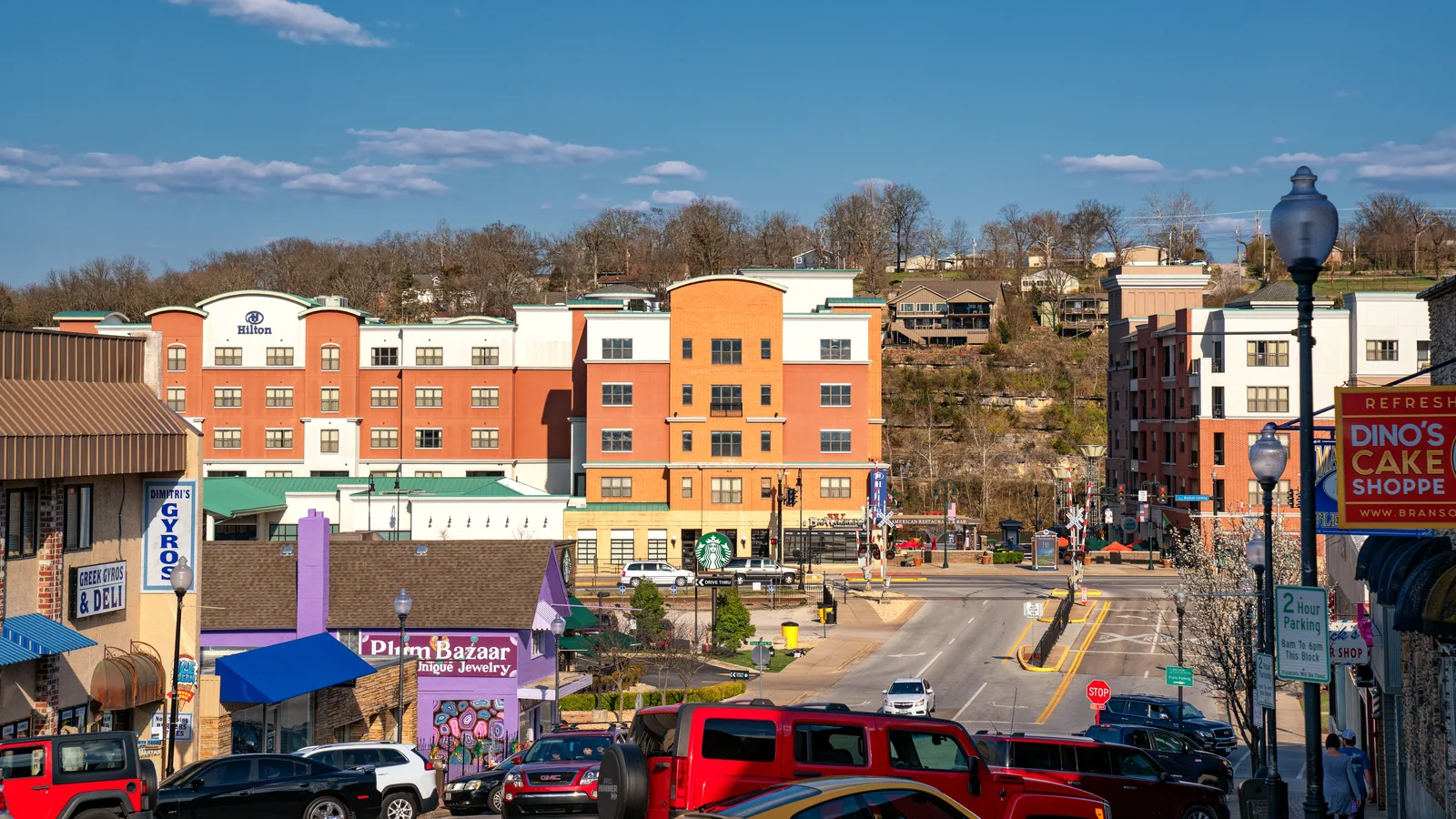
Taney County’s three designated 2027 Opportunity Zones all carry the Rural flag on Treasury’s final list and on Missouri’s designated-tract file. The City of Branson’s page maps them to Historic Downtown and Branson Landing, the West 76 Country Boulevard corridor, and Gretna Road and Branson Commerce Park. The Commerce Park tract’s Census internal point sits outside the city.
BRANSON, Mo. — All three of Taney County’s designated 2027 Opportunity Zones carry the Rural flag on Treasury’s final designated-tract list and on the Missouri Department of Economic Development’s designated-tract file. The designations take effect on January 1, 2027, and remain in place through December 31, 2036. The City of Branson announced the three areas in a November 6, 2026, news release. That release, and later local coverage, did not report that all three tracts are Rural.
The city’s Opportunity Zones page names the three census tracts and the areas they cover: Historic Downtown Branson and Branson Landing, the West 76 Country Boulevard Entertainment Corridor, and Gretna Road and Branson Commerce Park.
Missouri designated 131 of 523 eligible tracts, 68 of them Rural and 63 Non-Rural. Taney County had eight eligible tracts; five were not designated. Nationwide, Treasury designated 2,594 rural tracts among 6,576 Opportunity Zones, according to its November 5 announcement.
Taney County’s three designated 2027 Opportunity Zones:
| Area | Tract | GEOID | Rural | Poverty rate | Income ratio | Place (Census internal point) |
|---|---|---|---|---|---|---|
| Historic Downtown Branson and Branson Landing | 4802.05 | 29213480205 | Rural | 11.9% | 50.4% | Branson city |
| West 76 Country Boulevard Entertainment Corridor | 4801.06 | 29213480106 | Rural | 22.7% | 86.2% | Branson city |
| Gretna Road and Branson Commerce Park | 4802.06 | 29213480206 | Rural | 24.9% | 79.9% | No incorporated place |
Two of the three tracts have a Census internal point in Branson city. The Gretna Road and Branson Commerce Park tract does not. By Opportunity Zone Invest’s Census internal-point analysis, that point sits outside the city. A tract can straddle a city line, so this is not a finding that the tract lies entirely outside Branson. An address in the Commerce Park or Gretna Road area still has to be checked.
Treasury’s October 30, 2026, eligibility file, which uses ACS 2020–2024 data, shows how the three tracts qualified as low-income communities. The Historic Downtown and Branson Landing tract has a poverty rate of 11.9 percent, below the 20 percent poverty test, and a median family income of $46,014, or 50.4 percent of Missouri’s statewide median of $91,360. That meets the income test, which requires a ratio of 70 percent or less.
The other two tracts qualify on poverty of at least 20 percent with an income ratio no more than 125 percent. The ratios use the state median. Treasury does not list a metropolitan statistical area for these tracts, so the comparison is the Missouri statewide median, not a local metropolitan figure.
The city’s November 6 release called the designation “a tremendous opportunity for Branson to build its future” and said, “We have properties ready to be refreshed and businesses looking to grow. This is one more tool we can use to attract meaningful private investment that will benefit the people who live here.”
The city’s Opportunity Zones page says the program does not provide a direct federal grant to the city. Qualifying investors use a Qualified Opportunity Fund to invest in eligible businesses or real estate in a designated tract.
What this means for investors
The Rural flag is the investor-relevant fact in a tourism market. Enhanced rural incentives under Notice 2026-55 may apply if the investment otherwise qualifies. They are not automatic, and this is not a promise that every Branson project receives a 30 percent step-up. See OZI’s explainer on what Notice 2026-55 says, and what it is worth on a $500K gain.
A Branson address is not automatically in a zone. Status is set by 2020 census tract, not by city limits or ZIP code. Check an exact address with the Census Bureau address lookup or OZI’s tract lookup. New 2027 investments have to be in a designated tract and otherwise qualify.
What happens next
The designation takes effect on January 1, 2027, under Treasury’s November 5 announcement, and runs through December 31, 2036. The city’s November 6 release and its Opportunity Zones page are local announcements of a designation already on the federal list. Property owners and investors should look up the address, especially around Gretna Road and Branson Commerce Park, rather than assume that a Branson mailing address is enough.
Related. Taney County Opportunity Zones · Taney County tract list · Missouri Opportunity Zones · All state Opportunity Zone pages · Designated-tract final list · Designated-tract map · Census tract lookup · Opportunity Zone extension guide · Rural 30% step-up: what Notice 2026-55 says, and what it is worth on a $500K gain · Jefferson City’s Opportunity Zone map shrinks from three tracts to one · Midwest Opportunity Zones designated for 2027: Ohio, Michigan, Missouri and more · Treasury designates all 6,576 Opportunity Zone 2.0 tracts on its final list
Reporting note: Poverty rates, median family incomes and income ratios (tract 4802.05: 11.911765 percent, $46,014, 50.365585 percent; tract 4801.06: 22.676714 percent, $78,750, 86.19746 percent; tract 4802.06: 24.872953 percent, $73,036, 79.943085 percent; Missouri statewide median $91,360) were read from Treasury’s October 30, 2026 eligibility file (ACS 2020–2024) and rounded to one decimal place in the body and table. Counts were taken from the CDFI Fund final workbook, Treasury’s October 30 designated-tract and eligibility files, and the Missouri Department of Economic Development’s designated-tract file (Missouri 131 designated / 68 Rural / 63 Non-Rural of 523 eligible; Taney County 3 designated, all Rural, of 8 eligible). City assignments are Opportunity Zone Invest’s Census internal-point analysis, not a statement that any tract lies entirely inside or outside today’s city limits. None of the three 2027 tracts shares an 11-digit GEOID with Taney County’s 2018 designated tract; a missing match is not proof a 2018 zone was removed, because a tract may have been renumbered or split. The city’s November 6 release and Opportunity Zones page supply the area names and the local announcement; tract facts were cross-checked against Treasury’s lists and the state file. No outreach and no independently conducted interviews. Educational reporting, not tax, legal or investment advice.
FAQ
Do all of Branson’s Opportunity Zones carry the Rural flag?
Yes. All three of Taney County’s designated 2027 census tracts are marked Rural on Treasury’s final list and on the Missouri Department of Economic Development’s designated-tract file. The designations take effect on January 1, 2027, and remain in place through December 31, 2036.
Which areas of Branson are in the designated tracts?
The city’s Opportunity Zones page maps Historic Downtown Branson and Branson Landing, the West 76 Country Boulevard Entertainment Corridor, and Gretna Road and Branson Commerce Park to the three designated tracts. Status is by census tract, not by a street name or a Branson mailing address.
Is every Branson address, including Gretna Road and Commerce Park, in a designated zone?
No. Status is set by 2020 census tract, not by city limits or ZIP code, and a tract can straddle a line. By Opportunity Zone Invest’s Census internal-point analysis, the Gretna Road and Branson Commerce Park tract’s internal point sits outside the city. That is not a finding that the tract lies entirely outside Branson. Check each address with the Census Bureau address lookup or OZI’s tract lookup.
Does the Rural flag mean every Branson project gets a 30 percent step-up?
No. Enhanced rural incentives under Notice 2026-55 may apply if the investment otherwise qualifies. They are not automatic, and a Rural flag is not a promise that every project receives a 30 percent step-up.
- bransonmo.gov (1), as of November 17, 2026
- bransonmo.gov (2), as of November 17, 2026
- ded.mo.gov (1), as of November 17, 2026
- ded.mo.gov (2), as of November 17, 2026
- home.treasury.gov (1), as of November 17, 2026
- home.treasury.gov (2), as of November 17, 2026
- cdfifund.gov (1), as of November 17, 2026
- cdfifund.gov (2), as of November 17, 2026
- home.treasury.gov (3), as of November 17, 2026
- governor.mo.gov, as of November 17, 2026
- geocoding.geo.census.gov, as of November 17, 2026
- cdfifund.gov (3), as of November 17, 2026
Original reporting by the Opportunity Zone Invest Editorial Team for Opportunity Zone Invest, an independent OZ 2.0 research site. Facts are drawn from the primary sources cited above per our editorial standards. Nothing here is tax, legal, or investment advice. Found an error? See our corrections policy or write to Opportunity Zone Invest.
OZ tools: Opportunity Zone calculator · OZ 2.0 designation checker · 180-day rule calculator · Form 8997 instructions · Form 8996 instructions · all tools
Get OZ 2.0 updates
OZ 2.0 news, guidance, and key deadlines. Unsubscribe anytime.