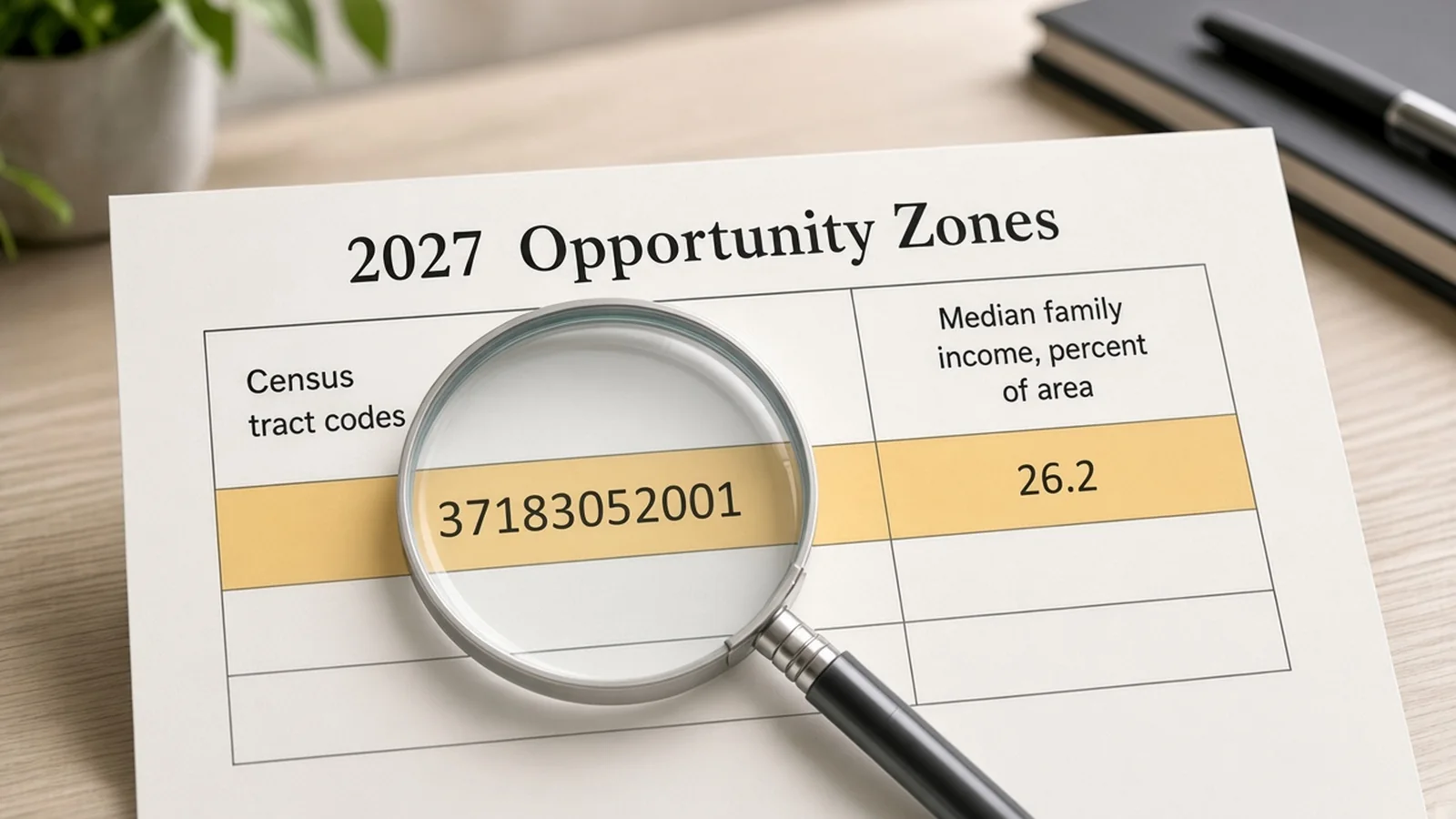
Tract 520.01 in Raleigh, N.C., home to the WakeMed hospital campus, had a median family income 26.2% of its area’s, the lowest of 226 designated 2027 Opportunity Zone tracts that met OZI’s data floors in counties of 100,000+ that grew 10% or more since 2020. Fayetteville, Ark., and Dallas follow.
RALEIGH, N.C. — Census tract 520.01, in Southeast Raleigh around the WakeMed Raleigh Campus, had a median family income of $32,440, or 26.2% of the Raleigh-Cary area median, the lowest among designated 2027 Opportunity Zone tracts in fast-growing U.S. counties that met OZI’s data-quality floors. That is according to an OZI analysis of Treasury’s eligibility workbook and final list of designated tracts, both dated October 2026. Wake County grew 11.3% from April 2020 to July 2025, per Census Bureau estimates.
The ten tracts are in seven states and ten counties, from Fayetteville, Ark., to Immokalee, Fla. Each had a median family income no higher than 40.1% of its area’s. Two are rural under Treasury’s classification. The measure is relative: a tract is compared with the metro area around it, so a tract in a high-income metro can rank low with a higher dollar income than tracts elsewhere. Across the 226 tracts that met every floor, the midpoint was 62.7% of the area median, close to the 60.5% midpoint for all designated tracts with an income figure. At the other end of the list is tract 39.06 in Travelers Rest, S.C., where median family income was 117.0% of the area’s and the tract qualified on its poverty rate.
Lead photo: an Opportunity Zone Invest illustration of a 2027 Opportunity Zones table, with a magnifying glass over the top-ranked tract. Credit: Opportunity Zone Invest illustration.
How we ranked them
The income measure is the one Treasury used to decide which tracts could be designated: tract median family income as a percentage of the area median, the mfi_ratio field in its eligible tracts workbook. Treasury’s notes say the figures come from the 2020–2024 American Community Survey five-year estimates, table B19113, and that the area is the metro or micro area for tracts inside one and the state otherwise. We checked the field against the Census Bureau’s ACS summary file. Every designated tract in the 50 states and D.C. with an income figure matched table B19113 exactly, except four tracts the Census Bureau reports only as “2,500-,” which Treasury records as $2,500. Lower ratios mean lower income relative to the area; we ranked from the lowest.
A county counted as fast-growing if it had at least 100,000 residents in the April 1, 2020, estimates base and grew at least 10% by July 1, 2025, in the Census Bureau’s Vintage 2025 county estimates. That is more than three times the national rate of 3.1% over the same period. Eighty-four counties meet both tests and 74 of them have designated tracts, 302 tracts in all. The 100,000 floor keeps small bases from producing outsize growth rates; our small-county ranking covered those separately.
Because tract estimates can be imprecise, a tract also had to have at least 1,000 residents and 200 families, a published margin of error with a coefficient of variation of 30% or less, fewer than 20% of residents in group quarters such as dorms or prisons, and fewer than 25% of residents enrolled in college or graduate school, since student households can report low incomes for reasons unrelated to the neighborhood. In all, 226 tracts in 71 counties passed. The margin-of-error test screened out the most, 53. The college floor removed three Provo, Utah, tracts where most residents are enrolled, and the group-quarters and college floors both removed a Warren County, Ky., tract with a ratio of 4.8%.
The top of the ranking holds up; the rest moves with the definition. Tract 520.01 ranks first in seven of the twelve versions we ran. Lowering the county floor to 50,000 or tightening the group-quarters limit to 10% keeps all ten. Raising the county floor to 250,000 keeps nine; dropping the margin-of-error floor or the college floor keeps eight. Ranking on dollar income instead of the ratio keeps seven, with the Myrtle Beach tract first. Ranking on poverty rate keeps five. The growth threshold matters most: measuring growth through July 2024 keeps five, while a 15% threshold or a looser 6.2% threshold, twice the national rate, keeps three each, and a stricter 20% margin-of-error test also keeps three. Most of the ten fall within one another’s margins of error, so small gaps in the ratio are not meaningful.
| Rank | Tract | Place | County | Median family income, % of area | Median family income (margin of error) | Area median | Poverty rate | County growth, 2020–2025 |
|---|---|---|---|---|---|---|---|---|
| 1 | 520.01 | Raleigh, N.C. | Wake County | 26.2% | $32,440 (±$4,552) | $123,586 | 26.3% | 11.3% |
| 2 | 107.03 | Fayetteville, Ark. | Washington County | 29.5% | $29,228 (±$8,324) | $99,115 | 39.7% | 10.3% |
| 3 | 317.20 | Dallas, Texas | Collin County | 30.0% | $32,654 (±$12,992) | $108,711 | 25.8% | 21.7% |
| 4 | 12 | Huntsville, Ala. | Madison County | 33.7% | $36,890 (±$13,860) | $109,450 | 41.3% | 11.7% |
| 5 | 51 | Charlotte, N.C. | Mecklenburg County | 34.3% | $35,063 (±$16,348) | $102,246 | 39.7% | 10.6% |
| 6 | 3 | Sarasota, Fla. | Sarasota County | 34.7% | $35,158 (±$14,340) | $101,189 | 30.9% | 10.6% |
| 7 | 506 | Myrtle Beach, S.C. | Horry County | 35.0% | $27,767 (±$7,319) | $79,345 | 40.6% | 21.8% |
| 8 | 217.39 | Lewisville, Texas | Denton County | 38.8% | $42,207 (±$16,355) | $108,711 | 20.4% | 18.0% |
| 9 | 112.04 | Immokalee, Fla. | Collier County | 39.9% | $43,098 (±$19,235) | $108,010 | 40.6% | 11.0% |
| 10 | 403.05 | Smyrna, Tenn. | Rutherford County | 40.1% | $42,135 (±$18,255) | $105,115 | 36.5% | 13.1% |
Income and poverty figures are 2020–2024 ACS estimates as published in Treasury’s workbook. Place names come from the Census geocoder for each tract’s internal point and for addresses mentioned below.
1. Tract 520.01, Raleigh, N.C.: 26.2% of the area median
Median family income in tract 520.01 was $32,440, with a margin of error of ±$4,552, in the 2020–2024 American Community Survey. That is 26.2% of the Raleigh-Cary area’s $123,586. The tract’s poverty rate was 26.3%, and the survey puts its population at about 4,030, in 938 families. Wake County grew 11.3% from April 2020 to July 2025 and has 13 designated tracts.
The tract takes in the WakeMed Raleigh Campus, WakeMed’s flagship facility, founded in 1961, and home to its Level I trauma center and children’s hospital. New Bern Avenue, which runs past the hospital, is being rebuilt for Raleigh’s first bus rapid transit route, connecting downtown to WakeMed and New Hope Road. The city’s project page, updated November 20, 2026, lists construction under way and completion in summer 2030. See Wake County.
2. Tract 107.03, Fayetteville, Ark.: 29.5% of the area median
Median family income in tract 107.03 was $29,228, with a margin of error of ±$8,324, in the 2020–2024 American Community Survey. That is 29.5% of the Fayetteville-Springdale-Rogers area’s $99,115. The tract’s poverty rate was 39.7%, and the survey puts its population at about 3,598, in 495 families. Washington County grew 10.3% from April 2020 to July 2025 and has eight designated tracts. About 15% of residents were enrolled in college or graduate school, under the 25% floor.
The tract lies north of the University of Arkansas campus, along North Leverett Avenue and the Fulbright Expressway. HUD’s April 2025 analysis of the Fayetteville-Springdale-Rogers housing market area, which covers Benton, Madison and Washington counties, counted 33,600 students at the university in fall 2024, up from 21,400 in 2010. It said apartments marketed to students made up more than 10% of new apartment units completed across that three-county area over the prior decade. See Washington County.
3. Tract 317.20, Dallas, Texas: 30.0% of the area median
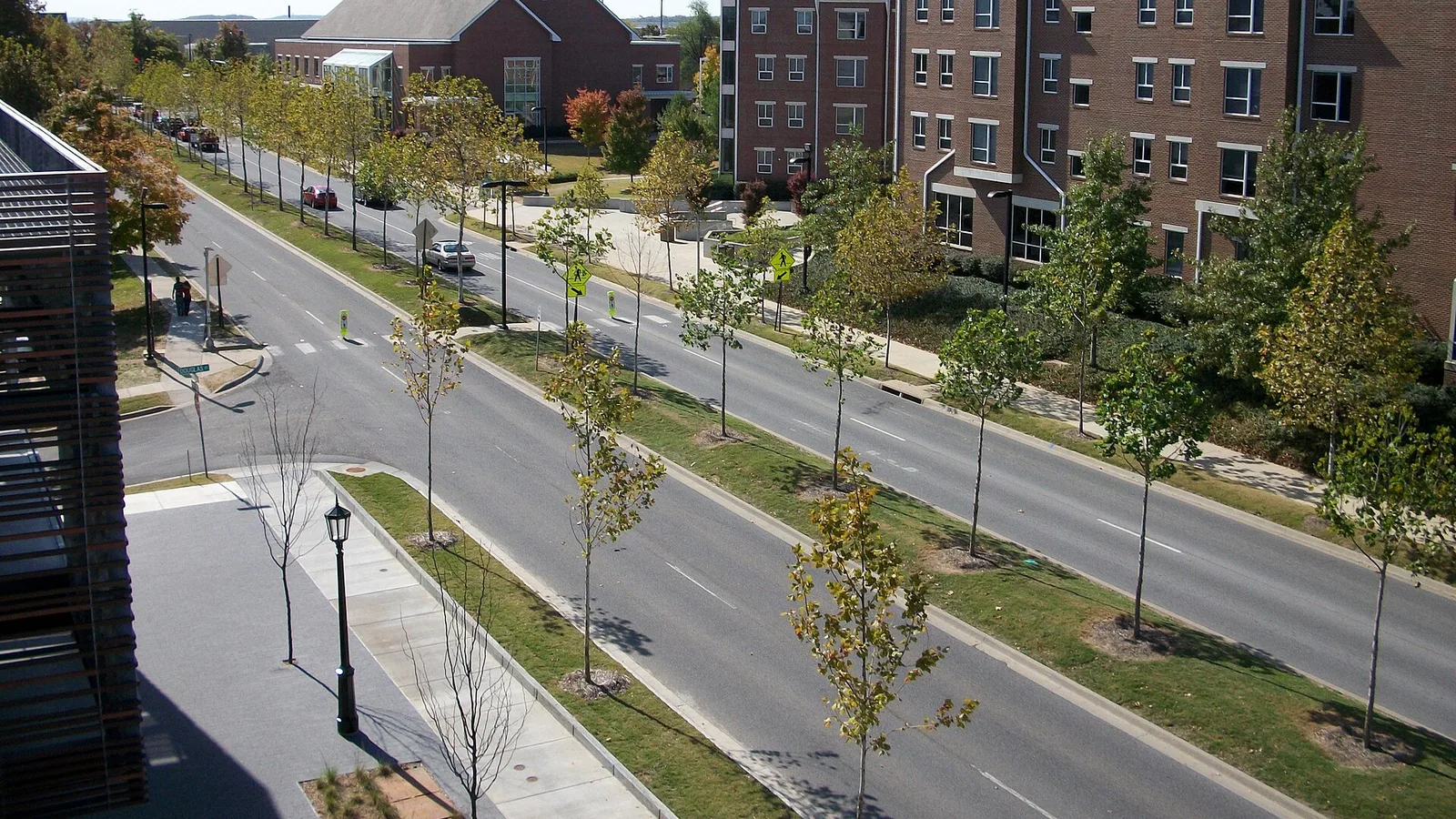
Median family income in tract 317.20 was $32,654, with a margin of error of ±$12,992, in the 2020–2024 American Community Survey. That is 30.0% of the Dallas-Fort Worth-Arlington area’s $108,711. The tract’s poverty rate was 25.8%, and the survey puts its population at about 3,131, in 575 families. Collin County grew 21.7% from April 2020 to July 2025 and has three designated tracts. The tract is in the part of Dallas that lies in Collin County, along McCallum Boulevard near Coit Road.
It covers the old Renner townsite. According to the Texas State Historical Association’s Handbook of Texas, Renner began in 1888 as a stop on the Cotton Belt railroad, was named for a railroad engineer, and had been absorbed into Dallas by 1983. The Cotton Belt corridor now carries DART’s Silver Line, which opened October 25, 2025, connecting Plano, Richardson, Dallas and other cities with DFW Airport, including a station at the University of Texas at Dallas to the east. See Collin County.
4. Tract 12, Huntsville, Ala.: 33.7% of the area median
Median family income in tract 12 was $36,890, with a margin of error of ±$13,860, in the 2020–2024 American Community Survey. That is 33.7% of the Huntsville area’s $109,450. The tract’s poverty rate was 41.3%, and the survey puts its population at about 3,797, in 811 families. Madison County grew 11.7% from April 2020 to July 2025 and has 10 designated tracts.
The tract includes much of Terry Heights, northwest of downtown Huntsville, and an elementary school that opened in 2016. A 2017 city account counted about 40 new single-family homes built there with federal block grant money. In a December 2024 presentation to the City Council, the nonprofit Second Mile Development described 39 years of service in the neighborhood, including improvements to 50 homes. The tract also holds Glenwood Cemetery, established by the city in 1870 and, per its historical marker, the burial place of distinguished African Americans including veterans of the nation’s wars from the Civil War on, educators, clergymen and entrepreneurs. See Madison County.
5. Tract 51, Charlotte, N.C.: 34.3% of the area median
Median family income in tract 51 was $35,063, with a margin of error of ±$16,348, in the 2020–2024 American Community Survey. That is 34.3% of the Charlotte-Concord-Gastonia area’s $102,246. The tract’s poverty rate was 39.7%, and the survey puts its population at about 2,416, in 393 families. Mecklenburg County grew 10.6% from April 2020 to July 2025 and has 13 designated tracts.
The tract runs along Statesville Avenue north of Uptown, through Druid Hills, and includes Camp North End. The site began as a Ford assembly plant; the county’s historic landmarks listing says it was once Ford’s largest plant in the Southeast and closed by 1932. It later served as an Army quartermaster depot and missile plant and then an Eckerd and Rite Aid facility, according to Camp North End, which says ATCO Properties bought the 76-acre site in 2016 and opened it to the public in 2017. See Mecklenburg County.
6. Tract 3, Sarasota, Fla.: 34.7% of the area median
Median family income in tract 3 was $35,158, with a margin of error of ±$14,340, in the 2020–2024 American Community Survey. That is 34.7% of the North Port-Bradenton-Sarasota area’s $101,189. The tract’s poverty rate was 30.9%, and the survey puts its population at about 4,450, in 1,155 families. Sarasota County grew 10.6% from April 2020 to July 2025 and has six designated tracts.
The tract is in Newtown, which the Suncoast Searchlight describes as a historically Black community, and includes Booker High School, the Robert L. Taylor Community Complex and a stretch of Dr. Martin Luther King Jr. Way. A September 2026 Suncoast Searchlight report described early plans from the Newtown Community Redevelopment Agency and the Newtown Business Council to remake the MLK corridor, which the plan calls the neighborhood’s “commercial main street,” and said no completion timeline has been set. On North Osprey Avenue near 21st Street, along the tract’s edge, the Sarasota Housing Authority is replacing 1950s duplexes known as The Courts with Amaryllis Park Place, branded Cypress Square. Its first 84 units opened in July 2024, and the final phases, with units for households earning 80% or less of the area median, received partial sign-off from city reviewers in June 2025, the Observer reported. See Sarasota County.
7. Tract 506, Myrtle Beach, S.C.: 35.0% of the area median
Median family income in tract 506 was $27,767, with a margin of error of ±$7,319, in the 2020–2024 American Community Survey. That is 35.0% of the Myrtle Beach-Conway-North Myrtle Beach area’s $79,345. The tract’s poverty rate was 40.6%, and the survey puts its population at about 5,688, in 1,228 families. Horry County grew 21.8% from April 2020 to July 2025 and has four designated tracts. Treasury’s workbook classifies the tract as rural.
The tract covers much of downtown Myrtle Beach, including Pelicans Ballpark, Chapin Memorial Library and the Booker T. Washington neighborhood. The city’s guide to its namesakes notes that Charlie’s Place on Carver Street hosted leading African-American artists from the late 1930s to the early 1960s, and that a park in the tract honors the City Council’s first African-American member. Bay Pointe III, a 70-unit affordable apartment community on Nance Street in the tract, was completed in April 2023. See Horry County.
8. Tract 217.39, Lewisville, Texas: 38.8% of the area median
Median family income in tract 217.39 was $42,207, with a margin of error of ±$16,355, in the 2020–2024 American Community Survey. That is 38.8% of the Dallas-Fort Worth-Arlington area’s $108,711. The tract’s poverty rate was 20.4%, and the survey puts its population at about 3,243, in 760 families. Denton County grew 18.0% from April 2020 to July 2025 and has seven designated tracts.
The tract is a strip of Lewisville along the Stemmons Freeway (Interstate 35E) and East Southwest Parkway. The city’s Lewisville 2025 plan update says housing costs in Lewisville have doubled since 2014, makes affordable and workforce housing a priority, and encourages converting older garden apartment complexes and aging strip centers into mixed-use neighborhoods. See Denton County.
9. Tract 112.04, Immokalee, Fla.: 39.9% of the area median
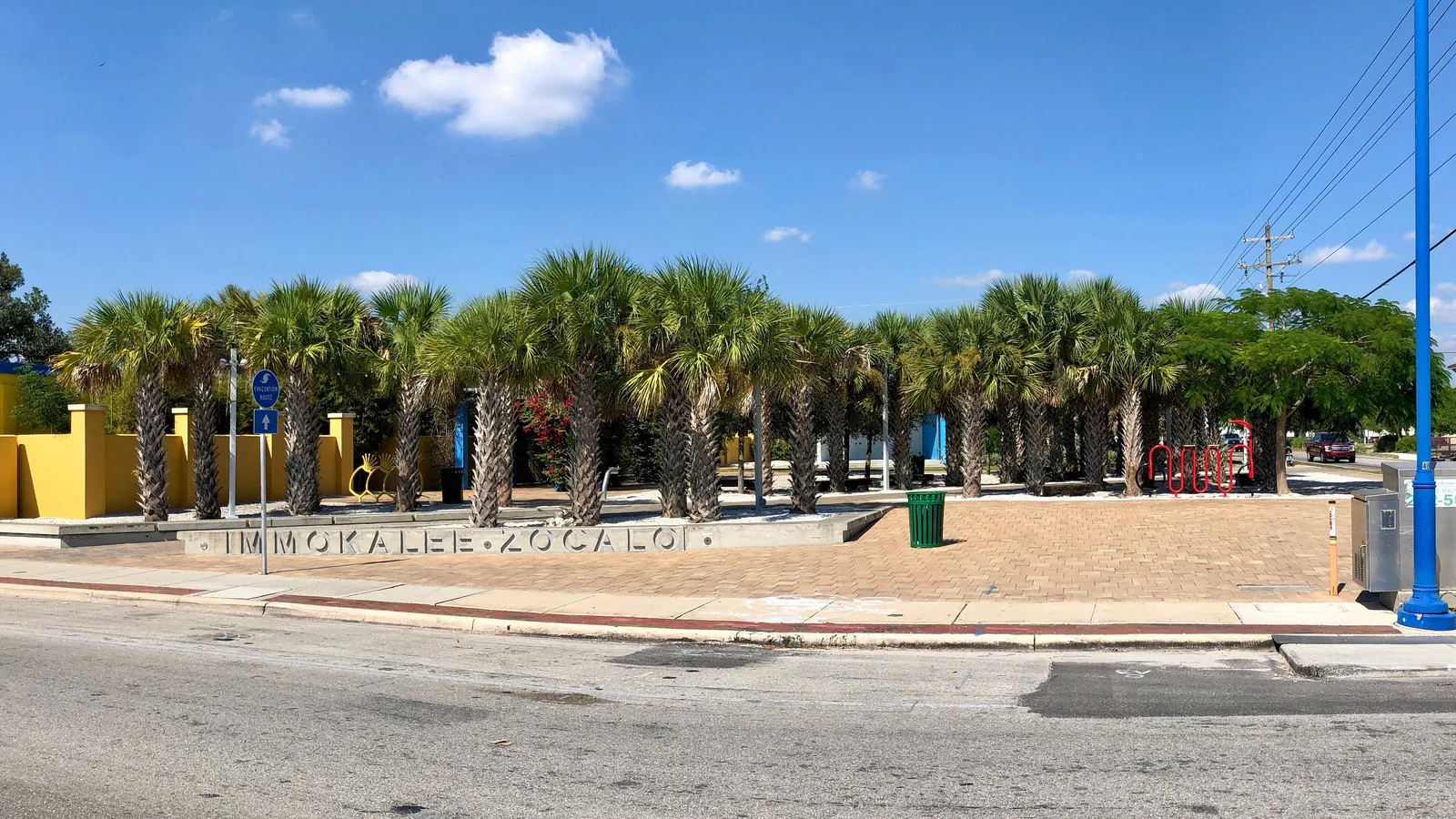
Median family income in tract 112.04 was $43,098, with a margin of error of ±$19,235, in the 2020–2024 American Community Survey. That is 39.9% of the Naples-Marco Island area’s $108,010. The tract’s poverty rate was 40.6%, and the survey puts its population at about 4,103, in 785 families. Collier County grew 11.0% from April 2020 to July 2025 and has five designated tracts. Treasury’s workbook classifies the tract as rural.
The tract covers the south side of Immokalee, including Our Lady of Guadalupe Catholic Church, Pinecrest Elementary and the county redevelopment agency’s office on South Fifth Street. The Immokalee CRA’s 2025 annual report describes the unincorporated community as the center of the region’s agriculture industry and “the prime producer of winter vegetables for the eastern United States,” and notes that Immokalee means “My Home” in the Mikasuki language. See Collier County.
10. Tract 403.05, Smyrna, Tenn.: 40.1% of the area median
Median family income in tract 403.05 was $42,135, with a margin of error of ±$18,255, in the 2020–2024 American Community Survey. That is 40.1% of the Nashville-Davidson-Murfreesboro-Franklin area’s $105,115. The tract’s poverty rate was 36.5%, and the survey puts its population at about 2,629, in 639 families. Rutherford County grew 13.1% from April 2020 to July 2025 and has two designated tracts.
The tract is in Smyrna along Old Nashville Highway and Rock Springs Road. The town’s May 2025 mobility plan says Smyrna’s population has historically centered between Interstate 24 and Lowry Street and expects new residential growth around Rock Springs and Rocky Fork roads. It lists added turn and through lanes where Rock Springs Road meets Old Nashville Highway, with design under way since October 2024. See Rutherford County.
At the other end: Travelers Rest, S.C.
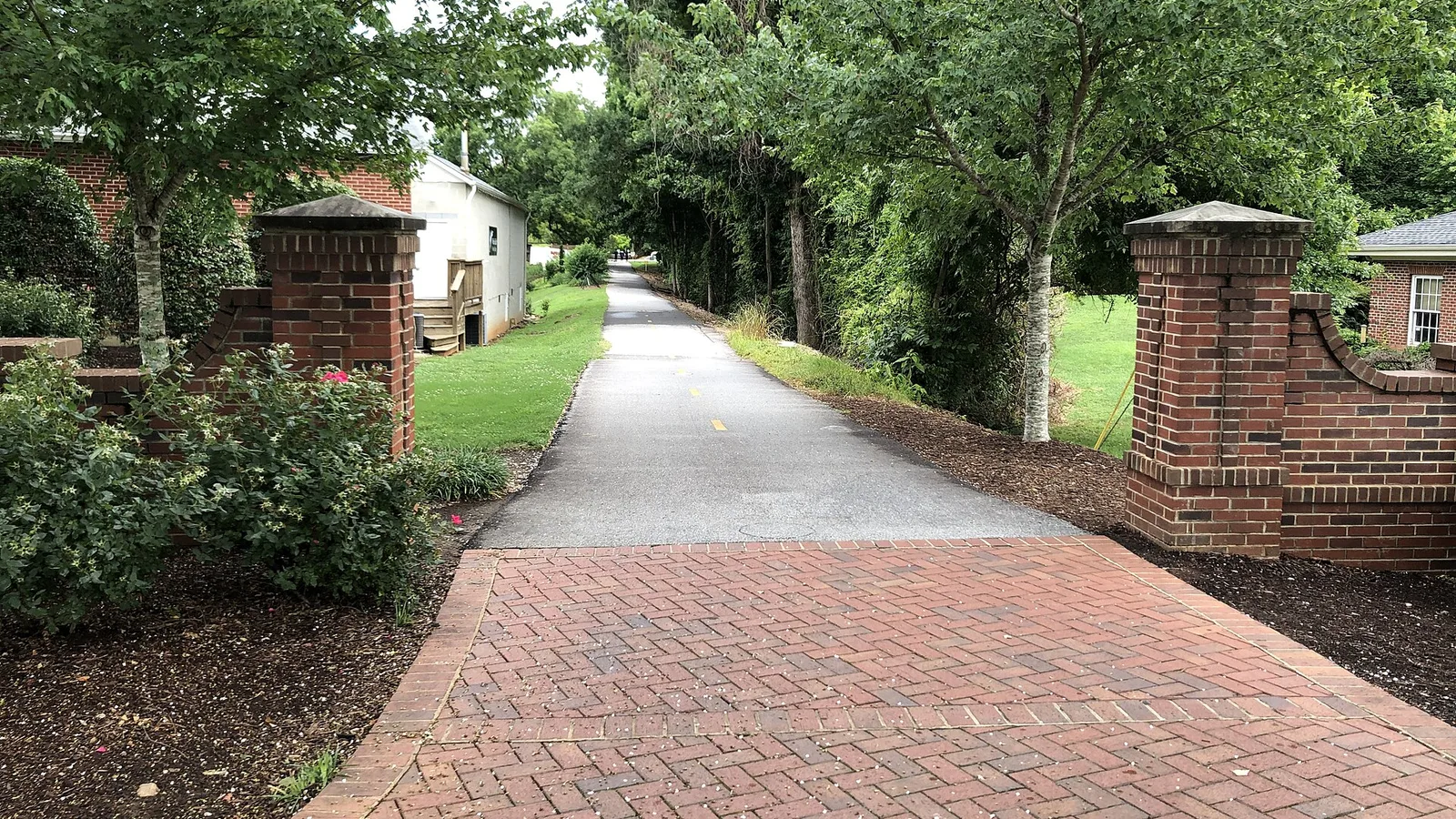
The 226 tracts are not all low-income in dollar terms. The last of them, tract 39.06 on the south side of Travelers Rest in Greenville County, had a median family income of $103,813, ±$18,215, or 117.0% of the Greenville-Anderson-Greer area’s $88,723. It qualified because its poverty rate, 27.2%, is at least 20% and its income ratio is under the 125% cap that applies to that test. Greenville County grew 11.0% from 2020 to 2025 and has six designated tracts. The town describes the Prisma Health Swamp Rabbit Trail, a 22-mile greenway on a former rail line, as running along Main Street in Travelers Rest. See Greenville County.
What happens next
The 2027 zones take effect January 1, 2027, and run through December 31, 2036, under IRS Notice 2026-67. Zones from the 2018 map remain in effect through December 31, 2028. Newer survey data will not change which tracts are designated; the next decennial determination date under the statute is July 1, 2036. Anyone can check an address with the designation checker, browse the OZ 2.0 final list or explore the map. State pages for North Carolina, Arkansas, Texas, Alabama, Florida, South Carolina and Tennessee list every designated tract.
Related: the top job-growth counties with 2027 zones, the fastest-growing small counties with 2027 zones, the counties with the most eligible tracts and no zones, the metros with the highest share of tracts designated, the zone counties with the fastest home price growth, the zone counties with the highest housing permit rates, the counties with the most zones and the fastest-growing counties with zones.
This article is for general information. It is not tax, legal or investment advice.
FAQ
Which designated tract in a fast-growing county has the lowest income?
Among tracts that met OZI’s data-quality floors, census tract 520.01 in Raleigh, N.C., which includes the WakeMed Raleigh Campus. Its median family income was $32,440, 26.2% of the Raleigh-Cary area median, in the 2020–2024 American Community Survey.
What income measure did OZI use?
Tract median family income as a percentage of the metro or state median, the mfi_ratio field in Treasury’s October 2026 eligible tracts workbook. It comes from the 2020–2024 ACS five-year estimates, table B19113, and is one of the tests Treasury used to decide which tracts could be designated.
How did OZI define a fast-growing county?
At least 100,000 residents in the April 1, 2020, Census estimates base and population growth of at least 10% by July 1, 2025, more than three times the national rate. Eighty-four counties qualify, and 74 have designated tracts.
Why were some low-income tracts left out?
To limit noisy estimates, tracts needed at least 1,000 residents and 200 families, a margin of error no more than 30% of the estimate in relative terms, and fewer than 20% of residents in group quarters and 25% enrolled in college. Seventy-six of 302 tracts were excluded.
Does a low income ratio mean a tract will get investment?
No. Designation makes investments in a tract eligible for the Opportunity Zone tax incentive, but it does not direct money to any tract, and the ranking says nothing about where investors will put money.
When do the 2027 zones take effect?
January 1, 2027, through December 31, 2036. Zones on the 2018 map stay in effect through December 31, 2028.
- home.treasury.gov (1), as of November 29, 2026
- home.treasury.gov (2), as of November 29, 2026
- www2.census.gov (1), as of November 29, 2026
- www2.census.gov (2), as of November 29, 2026
- geocoding.geo.census.gov, as of November 29, 2026
- irs.gov, as of November 29, 2026
- law.cornell.edu, as of November 29, 2026
- wakemed.org, as of November 29, 2026
- raleighnc.gov (1), as of November 29, 2026
- raleighnc.gov (2), as of November 29, 2026
- huduser.gov, as of November 29, 2026
- tshaonline.org, as of November 29, 2026
- dart.org, as of November 29, 2026
- cityblog.huntsvilleal.gov, as of November 29, 2026
- huntsvillebusinessjournal.com, as of November 29, 2026
- huntsvilleal.gov, as of November 29, 2026
- hl.mecknc.gov, as of November 29, 2026
- camp.nc, as of November 29, 2026
- yourobserver.com, as of November 29, 2026
- suncoastsearchlight.org, as of November 29, 2026
- cityofmyrtlebeach.com, as of November 29, 2026
- progresscarolina.com, as of November 29, 2026
- cityoflewisville.com, as of November 29, 2026
- immokaleecra.com, as of November 29, 2026
- townofsmyrna.org, as of November 29, 2026
- travelersrestsc.com, as of November 29, 2026
Original reporting by the Opportunity Zone Invest Editorial Team for Opportunity Zone Invest, an independent OZ 2.0 research site. Facts are drawn from the primary sources cited above per our editorial standards. Nothing here is tax, legal, or investment advice. Found an error? See our corrections policy or write to Opportunity Zone Invest.
OZ tools: Opportunity Zone calculator · OZ 2.0 designation checker · 180-day rule calculator · Form 8997 instructions · Form 8996 instructions · all tools
Fund managers: Advertise your fund
Get OZ 2.0 updates
OZ 2.0 news, guidance, and key deadlines. Unsubscribe anytime.